
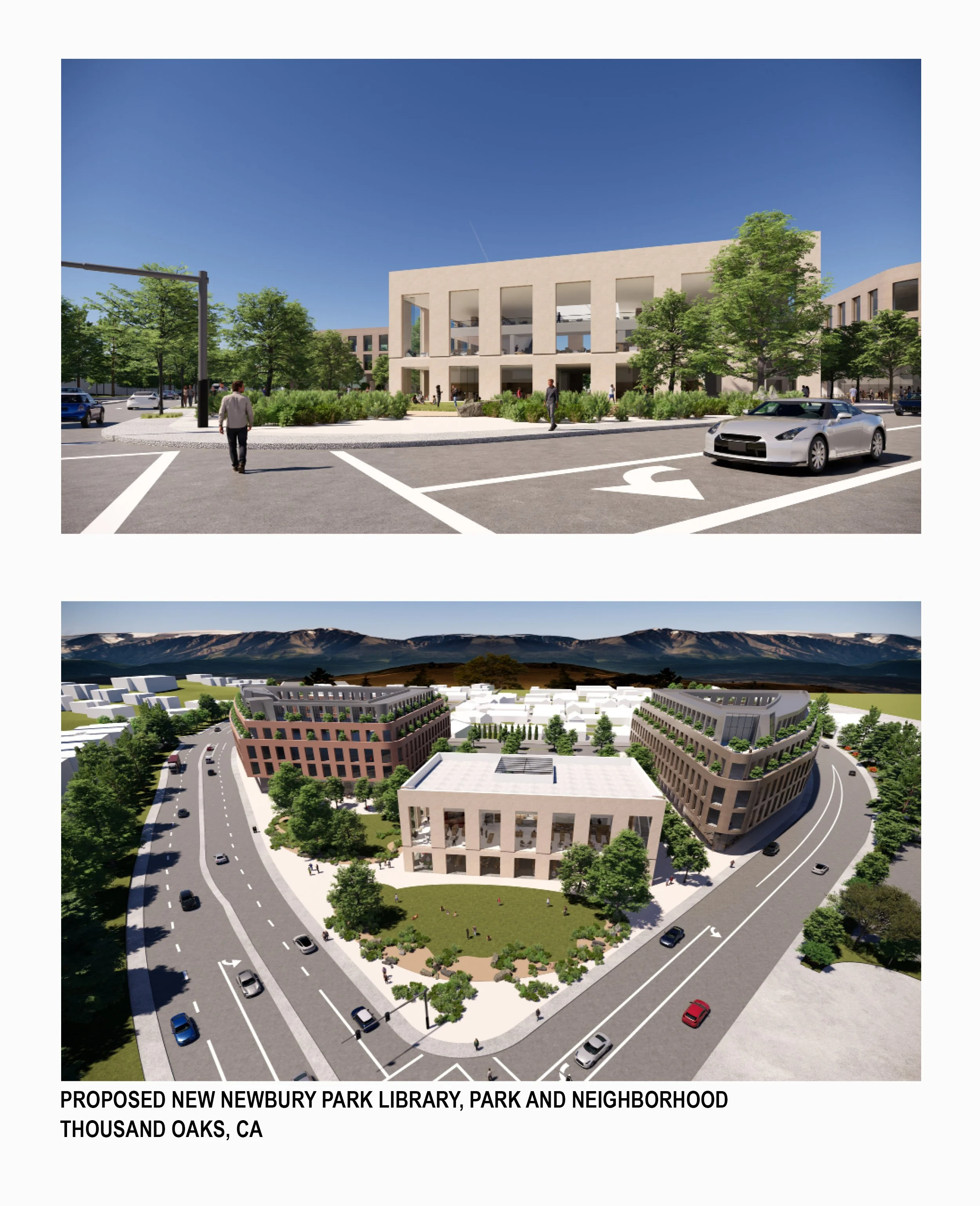
PUBLIC SECTOR INVESTMENT in the form of a new branch library will catalyze mixed-use residential development in this distressed 1960s era suburban shopping mall creating a neighborhood where currently there resides little more than struggling retail, too-wide streets and vast empty parking lots (Newbury Park Branch Library, Thousand Oaks, CA, Johnson Favaro 2023)
In the 1970s environmental regulations were passed in California in response to the wide-spread realization that building patterns and practices of the 1950s and 60s were rampantly degrading the quality of the natural environment across the state. The goal was to avoid or minimize detrimental impacts of development on natural resources such as water, air, flora and fauna.
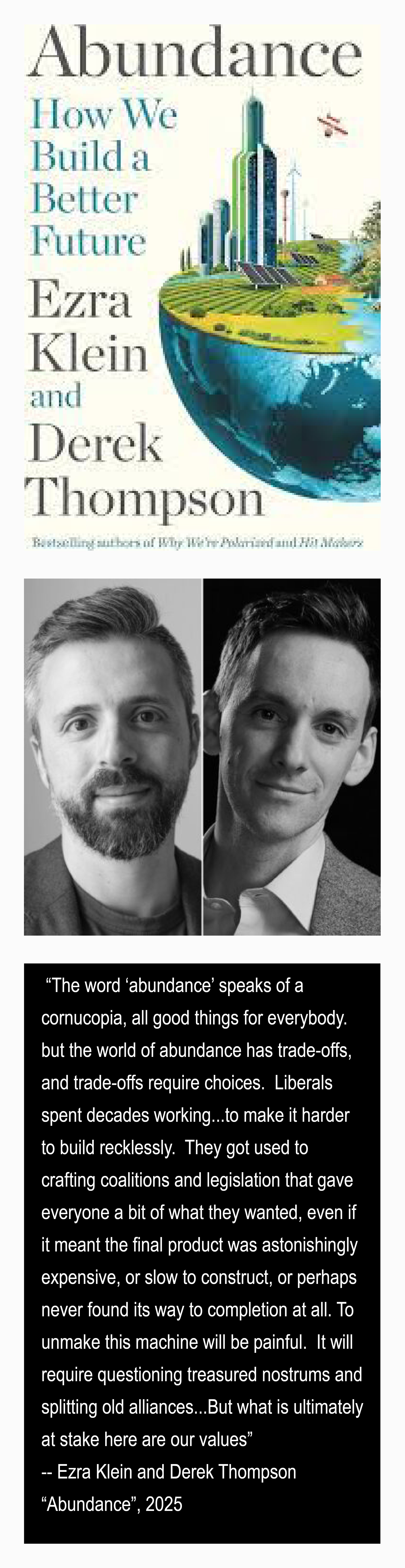
ABOVE images: Abundance, How We Built a Better Future, 2025, Ezra Klein & Derek Thompson
PUBLIC SECTOR AGENCY (in the purest sense of the word) is at the heart of the argument here, somewhat masked by the cheer-leading and vaguely misleading term “abundance.”
Mostly, the regulations succeeded. What’s left of the natural environment in California is still beautiful. Yosemite and Big Sur are still rugged and sparsely populated and the Napa Valley is not the San Fernando Valley. Santa Monica is not Rio de Janeiro and Pasadena’s air is (relatively) clean again, having in the 21st century rebounded from its decline in the 20th century when its air quality was nearly unbearable.
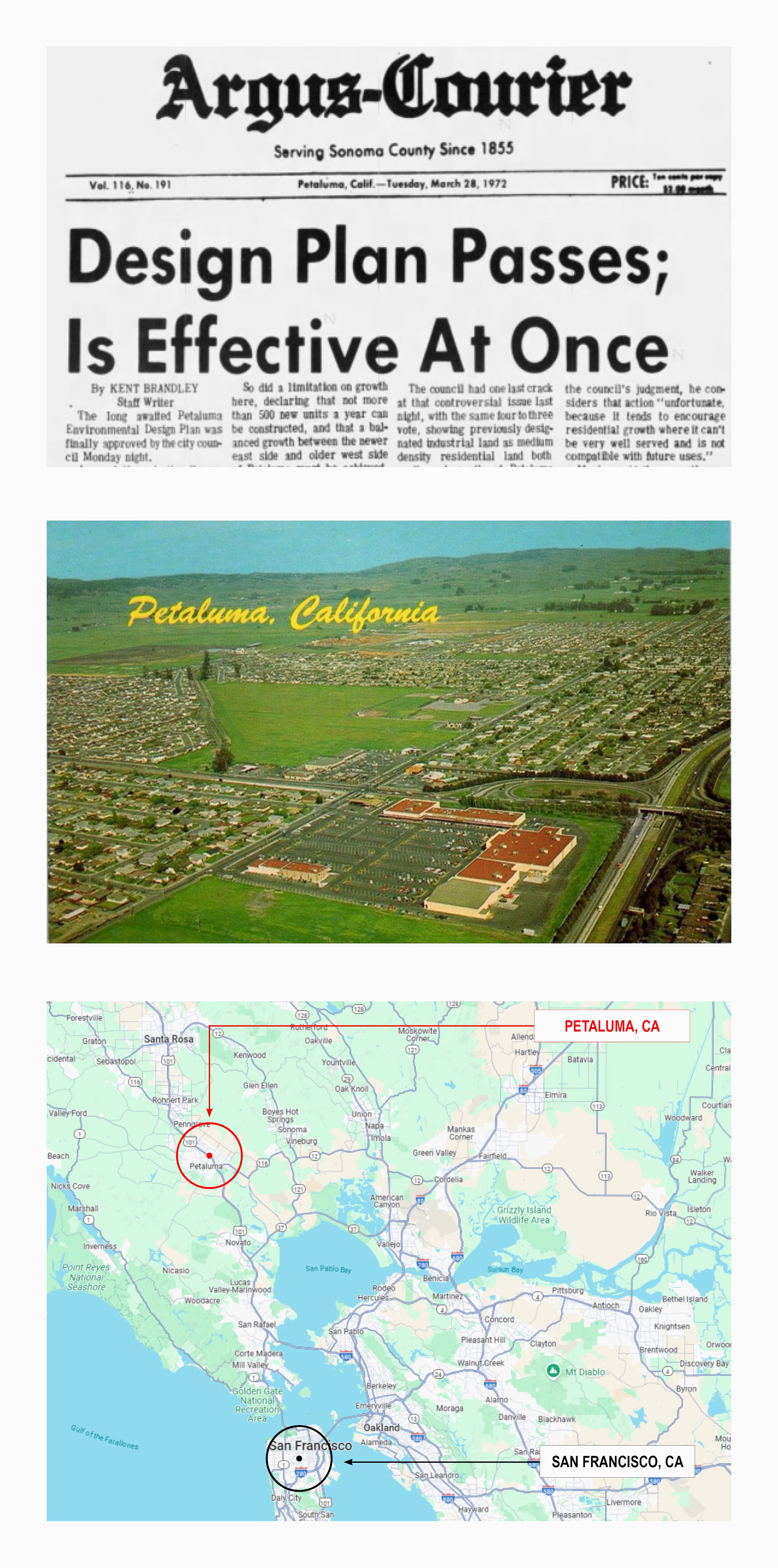
TOP: Front page, Petaluma Argus-Courier, March 28, 1972 by Petaluma Historical Library & Museum, MIDDLE: Petaluma postcard, early 1970s by Petaluma Historical Library & Museum, BOTTOM: Google Maps
FEAR NOT VISION OR DESIGN drove the anti-growth movement in places like Sonoma County in northern California in the 1970s when rampant suburban development threatened to overcome the natural environment as far as the eye could see.
The population of California stood at 21,500,000 in the 1970s and has almost doubled to 39,500,000 now. While the environmental regulations of the 1970s made it more difficult to build, the state still did accommodate almost doubling the state’s population over fifty years. The building did not stop.
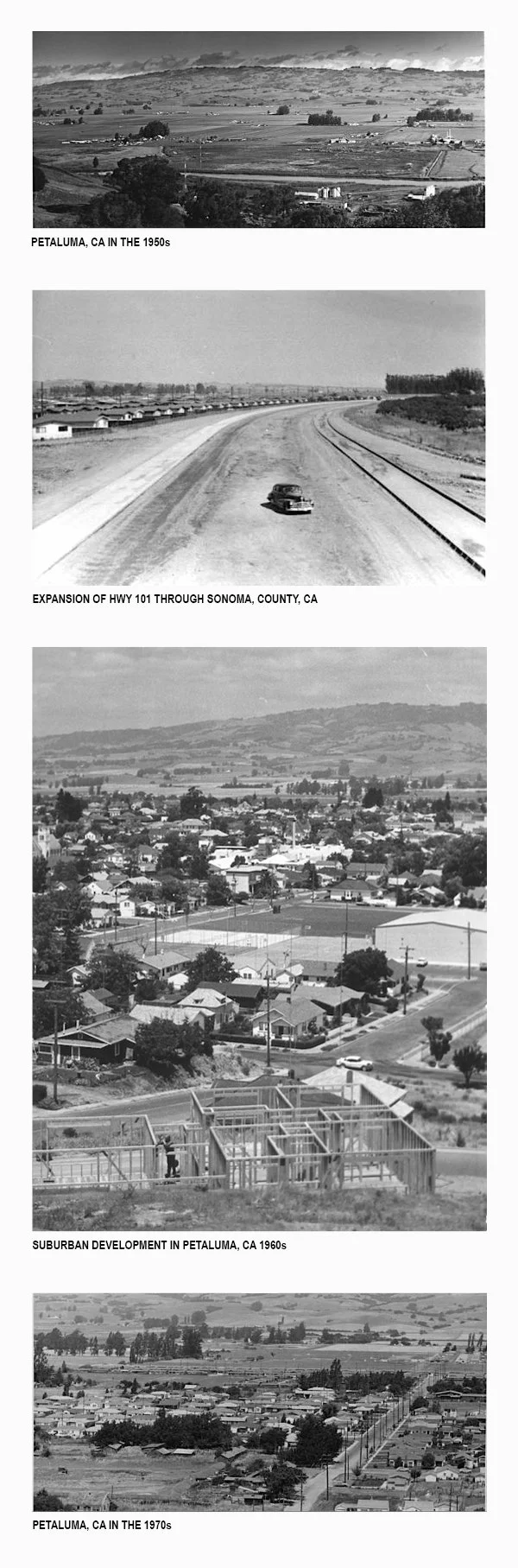
TOP :Farmland east of downtown Petaluma, 1939 by Sonoma County Genealogy & History Library, MIDDLE 1: Construction of U.S. 101 viewed from the new East Washington Street overpass looking north, 1955 by Sonoma County Genealogy & History Library, MIDDLE 2: Housing construction on Hill Boulevard and Bassett Street above Petaluma High, 1955 by Sonoma County Genealogy & History Library, BOTTOM: Madison Square housing development, looking down Madison Street, early 1950s by Sonoma County Genealogy & History Library.
UNDERLYING ASSUMPTIONS OF SUBURBAN DEVELOPMENT -- -our reliance on single family housing tracts and automobiles --- were never questioned in the 1970s era California anti-growth movement, nor have they yet. (The transformation of Petaluma in northern California from a ranching and farming community to a suburban community in the 1950s and 60s)
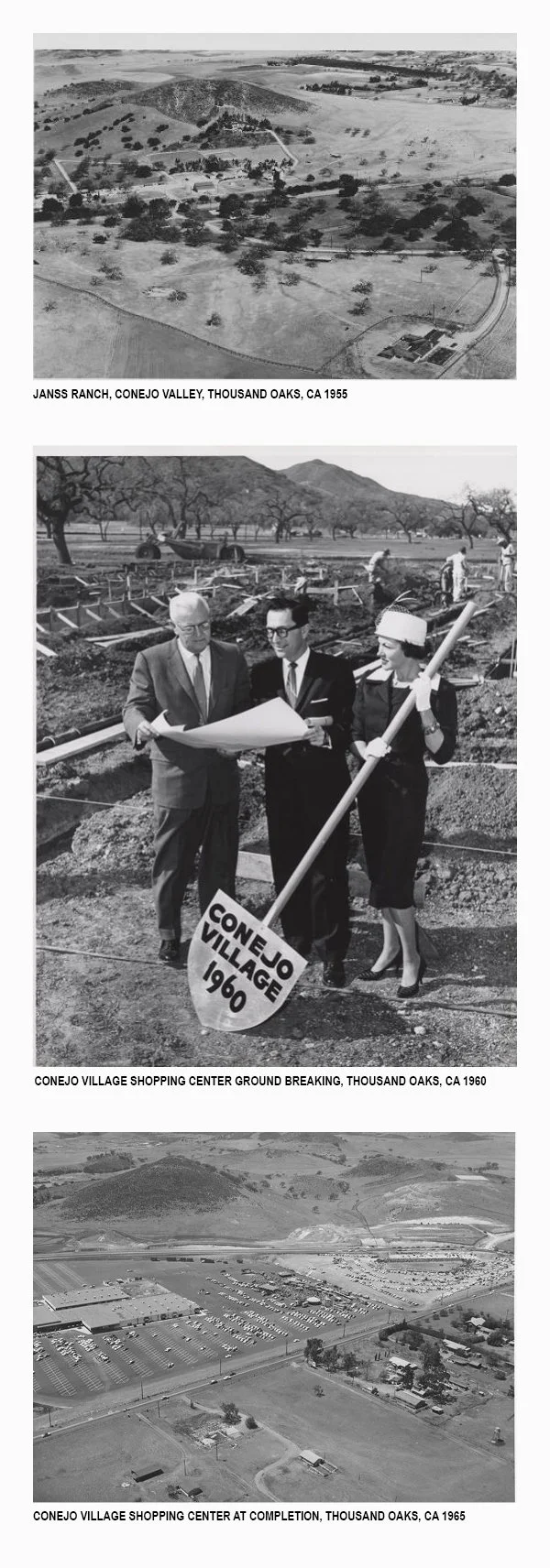
TOP: Aerial views of the Janss Ranch, prior to the 1955 widening of the 101 freeway by Thousand Oaks Special Collections / Calisphere Archive, MIDDLE: Historic 1960 groundbreaking ceremony for the Conejo Village development in the Conejo Valley, California by Thousand Oaks Special Collections / Calisphere Archive, BOTTOM : Mid-century aerial view showing early commercial development along the US-101 corridor in the Conejo Valley, featuring the original Conejo Village retail plaza by Thousand Oaks Special Collections / Calisphere Archive.
NORTH, SOUTH, EAST AND WEST suburban development, widely considered the apotheosis of the good life expanded at a fast clip across California in the post-war and mid-century years. (The transformation of Thousand Oaks in southern California from a ranching and farming community to a suburban community in the 1950s and 60s)
But those 1970s era regulations never questioned how we built. We always built outward, always at minimal density and height, always accommodating the automobile. We are left now with a built environment of which there is little that is beautiful. Our regulations did nothing to improve our cities (if you can call them that), or our suburbs or ex-urbs--all of which are both alienating and alienated from our natural environment. Napa is not Sienna, nor is Santa Monica Lisbon nor Pasadena Bordeaux.
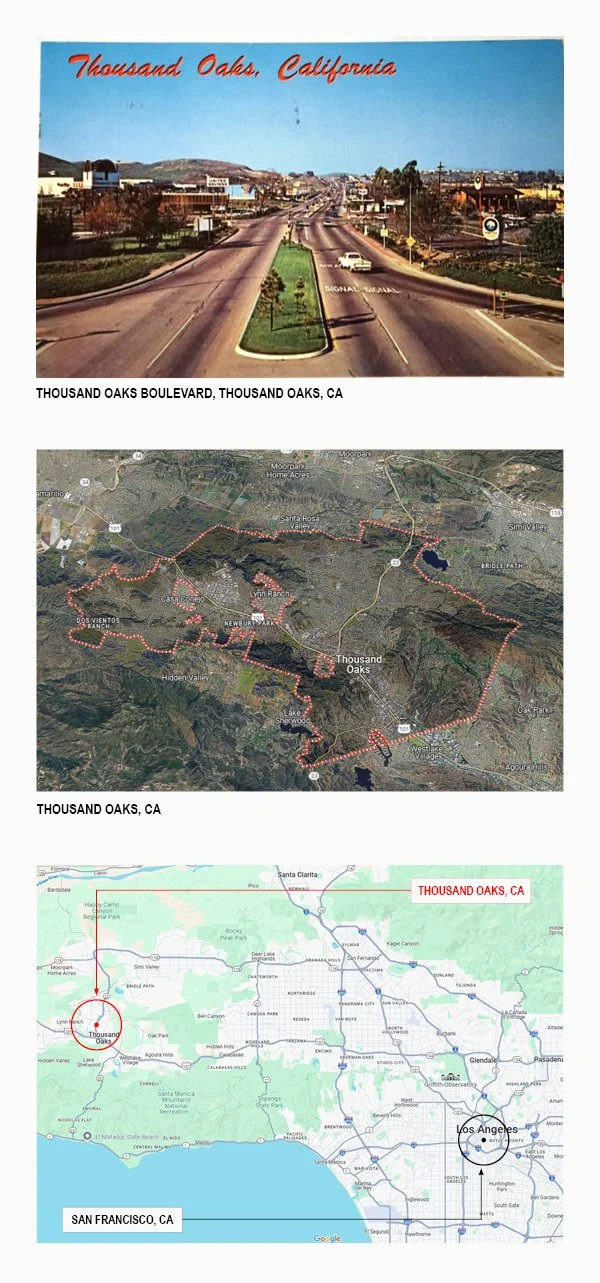
TOP: Thousand Oaks Boulevard in Ventura County, California by Thousand Oaks Library Special Collections / Calisphere Archive, MIDDLE: Map of Thousand Oaks showing city limits by Google Earth, BOTTOM: Google Maps
THOUSAND OAKS, a community of 125,000, 55 square miles in extent, lies west of the Los Angeles metropolitan area and like suburban communities across California came into its own with the building of a freeway (in this case HWY 101).
We also, apparently, have not built enough. Our famous “housing crisis” a generation or two in the making has now caught up with us and it will take another generation or two to fix it. Meanwhile we, the 4th largest economy in the world, still do not have a decent rail system--a 19th century technology-- even as we brag about our supposedly world-changing silicon-based 21st century technology.
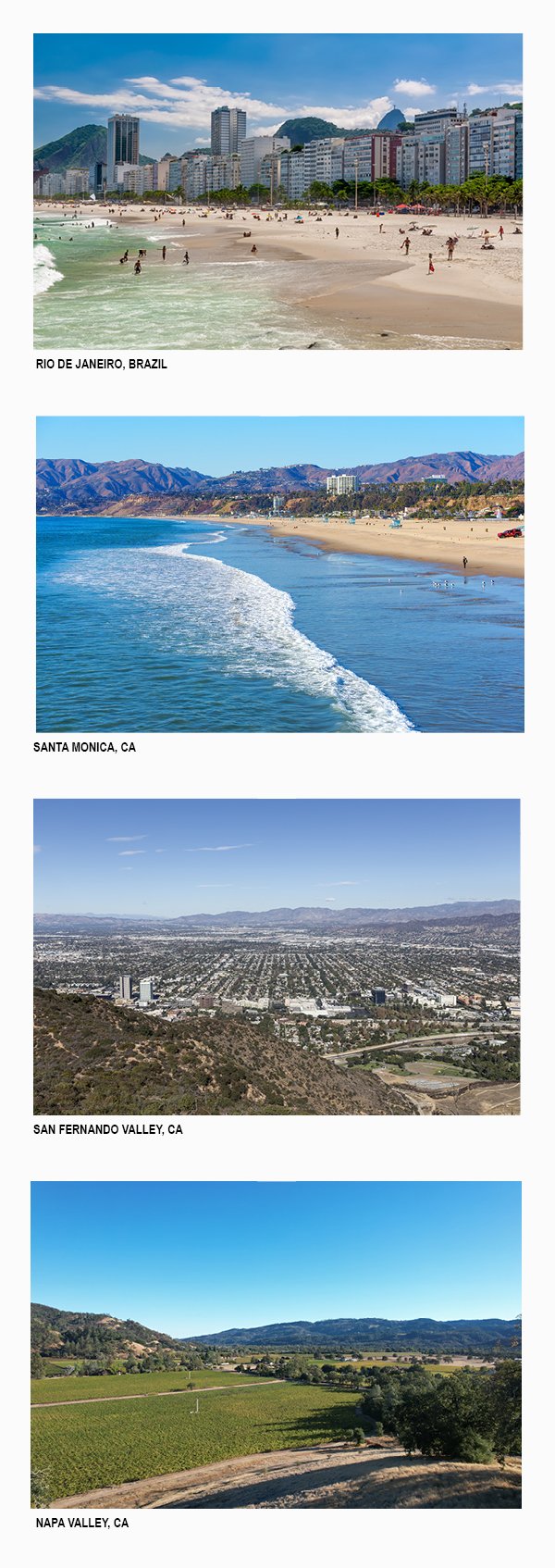
ABOVE Images: Source Shutterstock
1970s CALIFORNIA recoiled from what seemed like out-of-control development and instituted environmental controls through laws and ordinances that curtailed it in many places across the state, among them Santa Monica in the south and Napa in the north.
Another goal of the 1970s regulations came in response to heavy-handed, government driven development (such as freeways) that left out communities most affected by it. Passed into law in 1970, the California Environmental Quality Act (CEQA) intended to mitigate impacts on communities by giving them a voice in development, but it applied only to public projects. In 1972, however, a homeowner’s association, Friends of Mammoth, sued the Mono County Board of Supervisors over a proposed condominium development in Mammoth, arguing that any building project regardless of its funding was a public project (a claim with which we do not disagree). The courts agreed and ever since CEQA has applied to private development too.
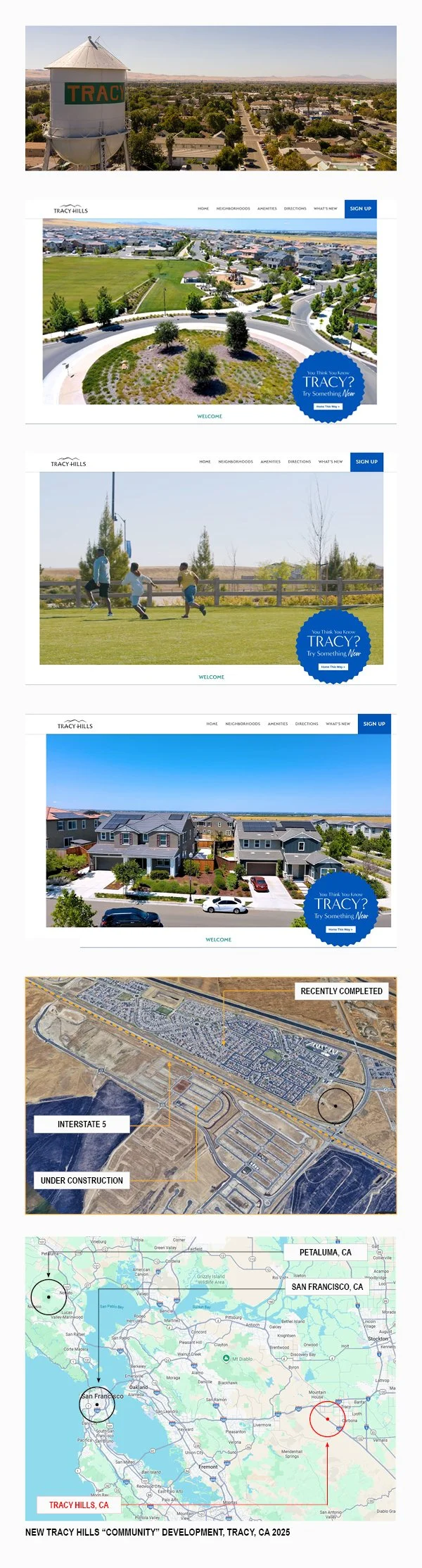
ABOVE 4 Images: Tracy Hills resort-style development project by tracyhillslife.com, MIDDLE 5: Aerial Map of Tracey Hills Development by Google Earth, BOTTOM: Google Maps.
NEW SURBURBAN SINGLE FAMILY TRACT DEVELOPMENT continues seemingly unabated to this day, the underlying assumptions about how we live not having budged since 1950 (New “Tracy Hills Community” development under construction in 2025 along Interstate 5 on the west side of the San Joaquin Valley)
ABOVE : Google Maps/ Satellite
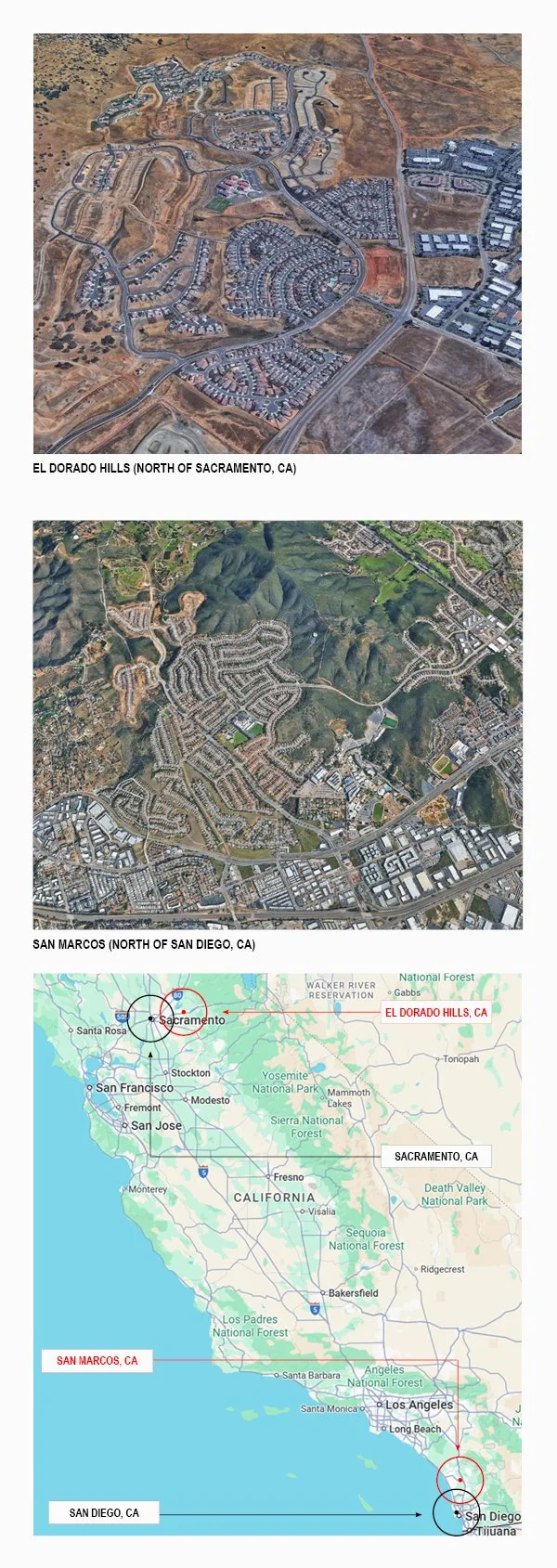
OUTWARD EXPANSION CONTINUES consuming ever more virgin lands at increasing distances from metropolitan areas of the state. (Northeast Sacramento County above, Northeast San Diego County below)
ABOVE Images: Source Shutterstock
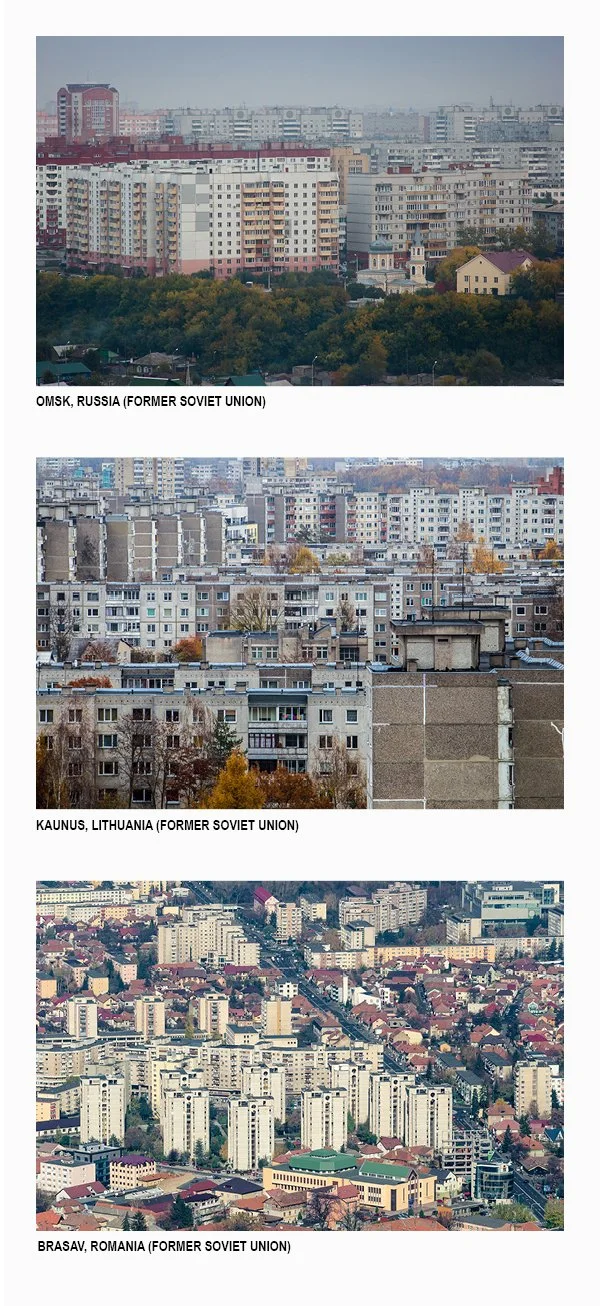
MEANWHILE THE USSR also built alienating and dystopian tracts of housing to accommodate burgeoning populations in the 1950s and 60s-- in their case tall apartment buildings --- in abundance and without abandon across the empire.
Suing over development under CEQA has now become a major tool of communities (though, only those who have the resources) with which to stop any kind of development anywhere in California, effectively diminishing it if not killing it off—or, worse (ironically? hypocritically?), pushing it even further out to the hinterlands.
ABOVE Images: Source Shutterstock
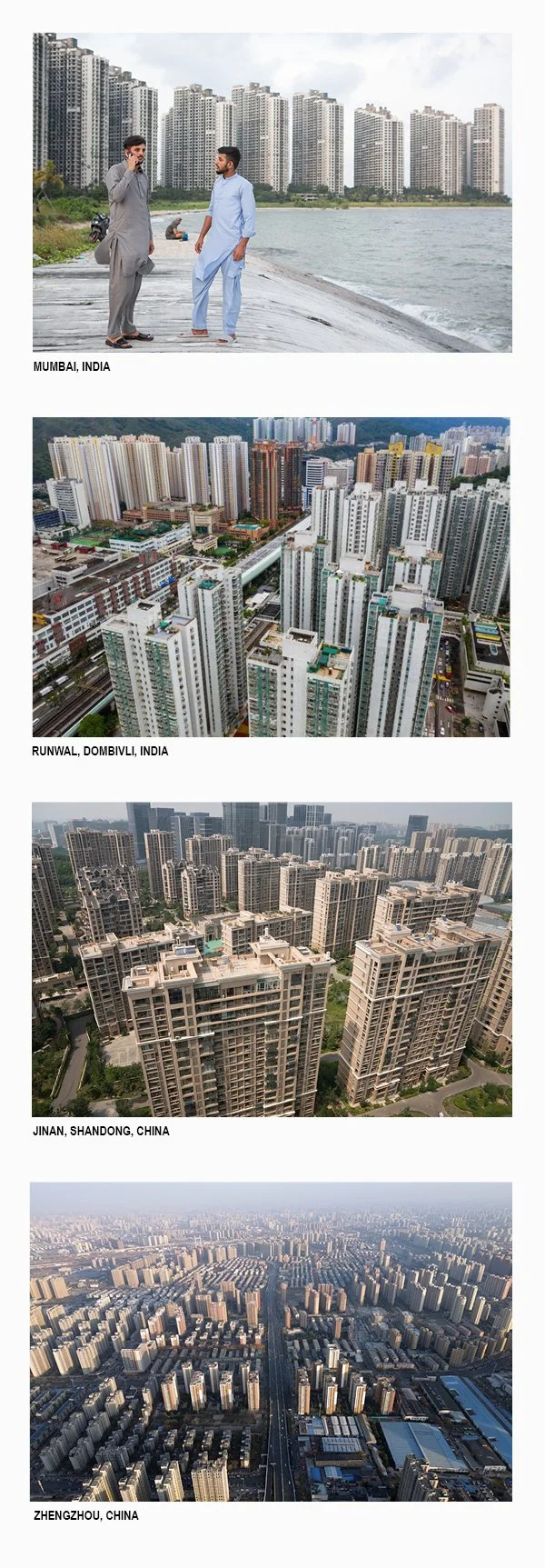
BURGEONING POPULATIONS admittedly require extreme measures, when, for example, traditionally agriculturally based populations flood into metropolitan areas; and yet we also know that the density of development required need not nor should it have taken the form that it has.
In California and across the country a movement has now emerged, the “abundance movement” that argues, among other things, that while the intent of the half-century regulatory regime was well founded, after years of corruption and abuse it has bred a culture of proceduralism and prohibitionism within both our governments and our communities. We are not only not willing but unable to build anything anymore because we have so gummed up and drawn-out our review and permitting processes. We have become satisfied that a successful process is itself a successful outcome, regardless of the outcome or even whether there is an outcome.
ABOVE Images: Source Shutterstock
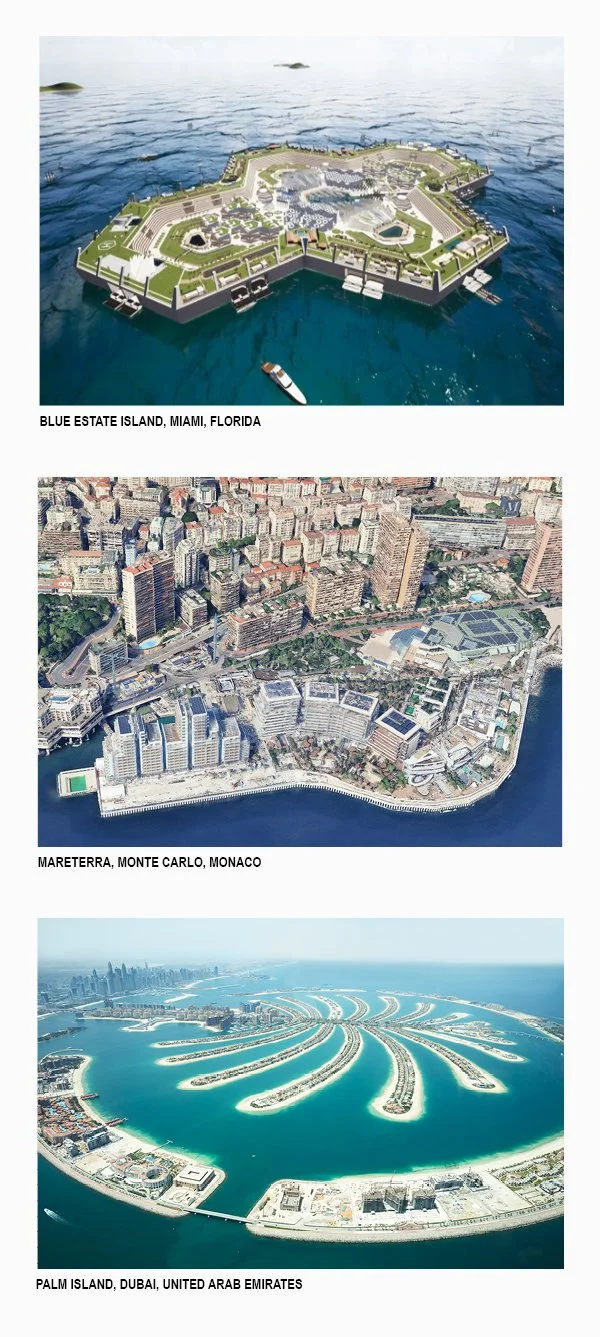
AN ABUNDANCE OF POOR JUDGEMENT driven by irrational impulses, megalomania, international finance and greed has given us hugely extravagant and expensive developments that are little more than distractions from what are the central urban design challenges of our time
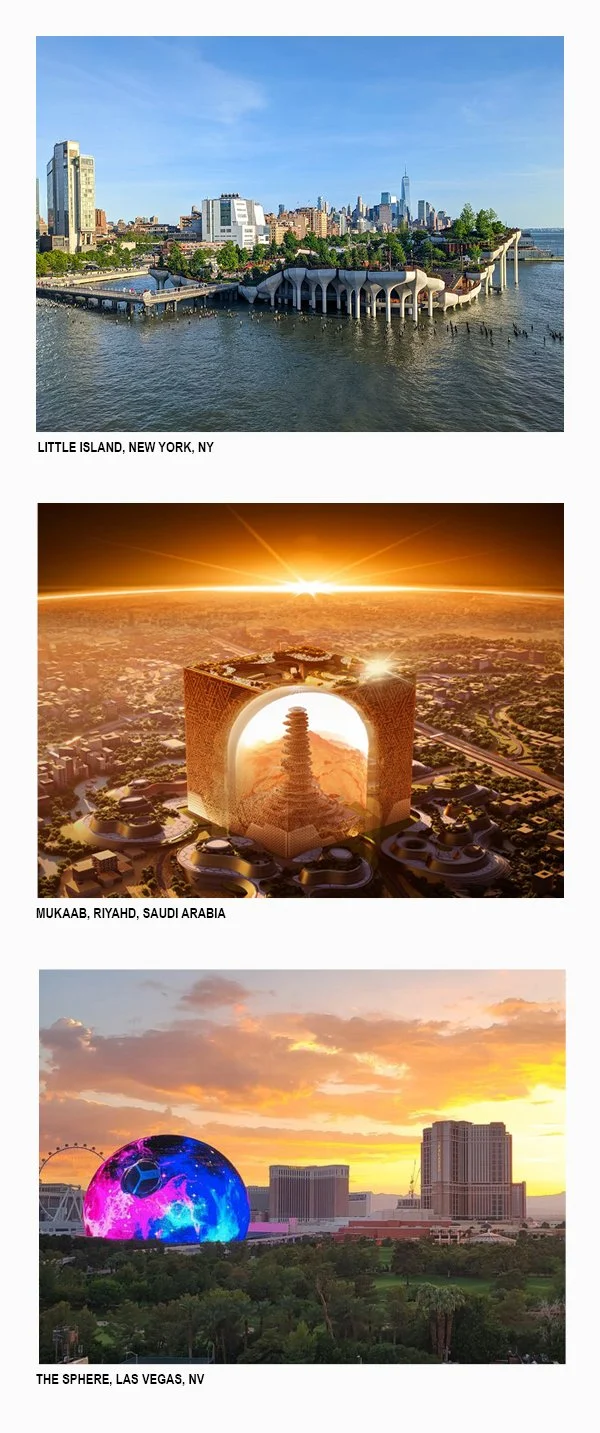
TOP: Shutterstock, MIDDLE: New Murabba Development Co. / AtkinsRéalis, BOTTOM: “Sphere Sensation Celebration Photo Gallery,” Tripadvisor, Nevada Tour Co.
AN ABUNDANCE OF VANITY PROJECTS has proliferated across the country and the world, but to what end, in the name and to the benefit of whom?
The abundance movement advocates that Instead of a culture of prohibition and scarcity in governance and community sentiment we need a culture of benevolence and abundance. We need to develop the ability to build again, like we did in the 1950s and 60s in California. We need to strengthen not discourage state capacity, that is, the ability of governments to innovate, improvise, enable, facilitate, get things done. And our communities need to chill-- to put two-and-two together, to realize that all those unsightly people on the street are the result of fifty years of our own obstructionism.
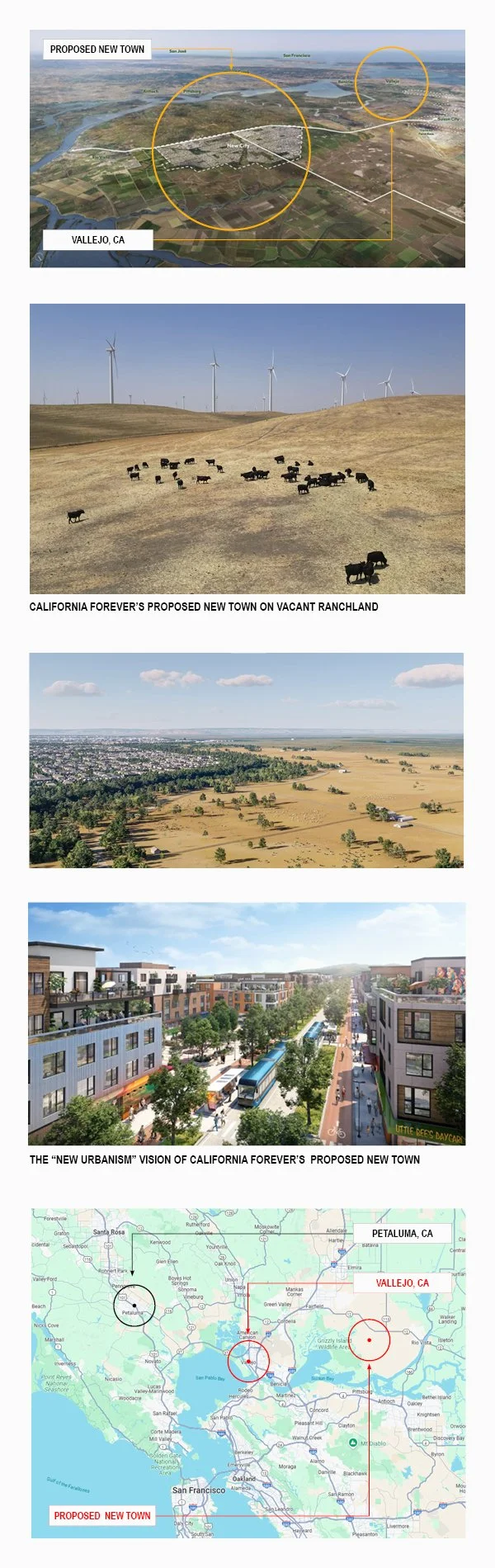
TOP: Regional rendering of the proposed "California Forever" city in Solano County by California Forever / Flannery Associates, MIDDLE 1: Montezuma Hills near Rio Vista, proposed site by Solano County Agricultural Land Registry Archive, MIDDLE 2: Aerial rendering of high-density residential core meeting protected greenbelt by California Forever, MIDDLE 3: Conceptual walkable, transit-oriented neighborhood by California Forever, BOTTOM: Google Maps
BILLIONAIRE FUNDED AND INTERNATIONALLY FINANCED path-of-least-resistance real estate development continues to plague the state no matter how camouflaged it is in “new urbanist” imagery (California Forever’s proposed “new town” near Rio Vista in east Sonoma County, CA, just 30 miles east of Petaluma, CA)
But here’s the thing: communities are not unjustified in their fear of more building. All they see is disharmony, rag-tag, hodge-podge, not a lot of craftsmanship and lots of traffic. The call to build therefore begs the question: Build what, how, where?
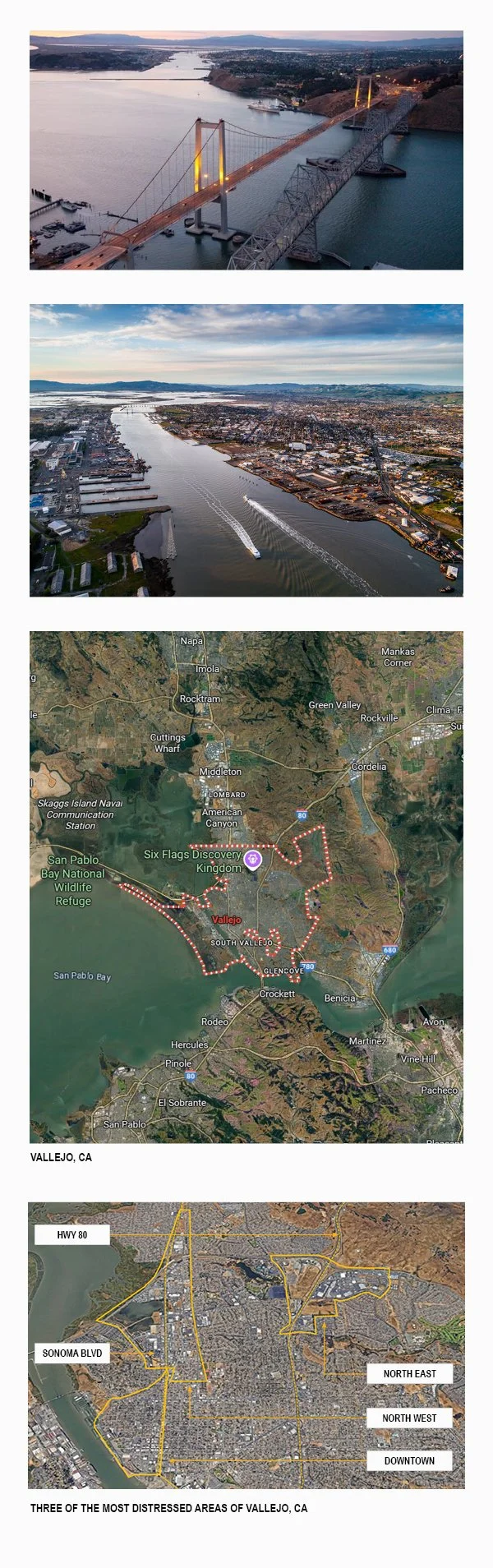
TOP: Aerial view of the dual-span Carquinez Bridge over the Carquinez Strait at dusk, linking Vallejo and Crockett on I‑80 by California Department of Transportation (Caltrans), MIDDLE 1: Commuter ferries cruising down the Mare Island Strait waterway in Vallejo by San Francisco Bay Ferry, MIDDLE 2 and BOTTOM: Google Maps / Satellite
OLD TOWNS across California even ones near the California Forever site such as Vallejo, CA just 10 or 15 miles to the west are distressed, underbuilt, prime for investment--and whose redevelopment would accomplish all the goals of the California Forever project not only better but also with less impact on the natural environment.
We cannot nor should we ever again build in California as we did in the 1950s and 60s (or since). The regulatory revolt of the 70s was right in attempting to stop it, but had we not built that way in the first place it may not have been necessary. Spread-out, low-rise development not only destroys land but demands huge resources to both build and maintain (water, energy, materials) and contributes to the degradation of not only the natural environment but the global climate (greenhouse gases, heat island effects).
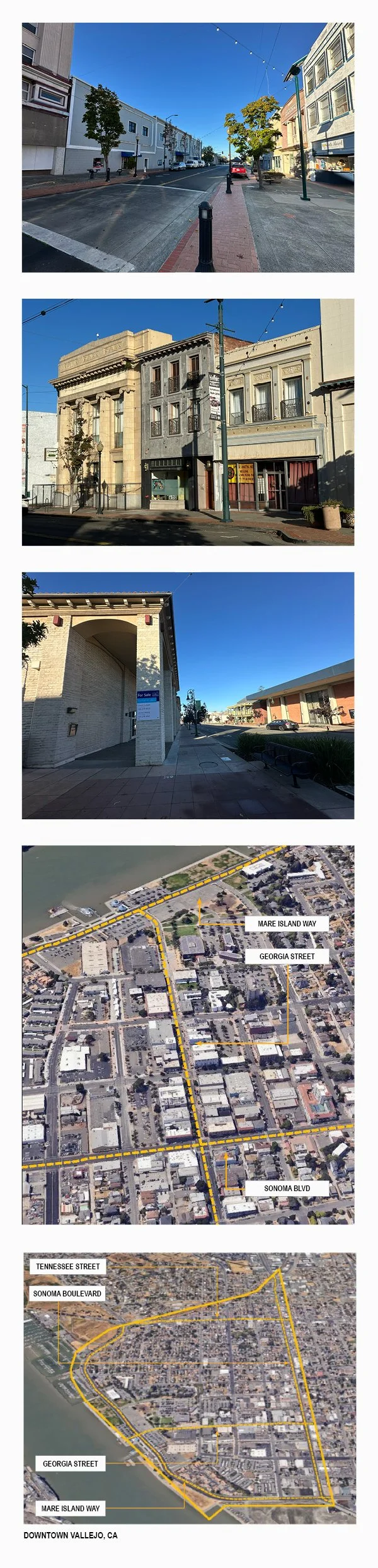
TOP 3 Images: Downtown Vallejo Commercial Historic District, BOTTOM 2 Images: Google Maps / Satellite
DOWNTOWN VALLEJO is a 40-minute ferry ride from San Francisco, beautifully situated geographically, abandoned and for sale--and certainly affordable for the billionaires who have bought up the ranchlands under California Forever’s proposed new town.
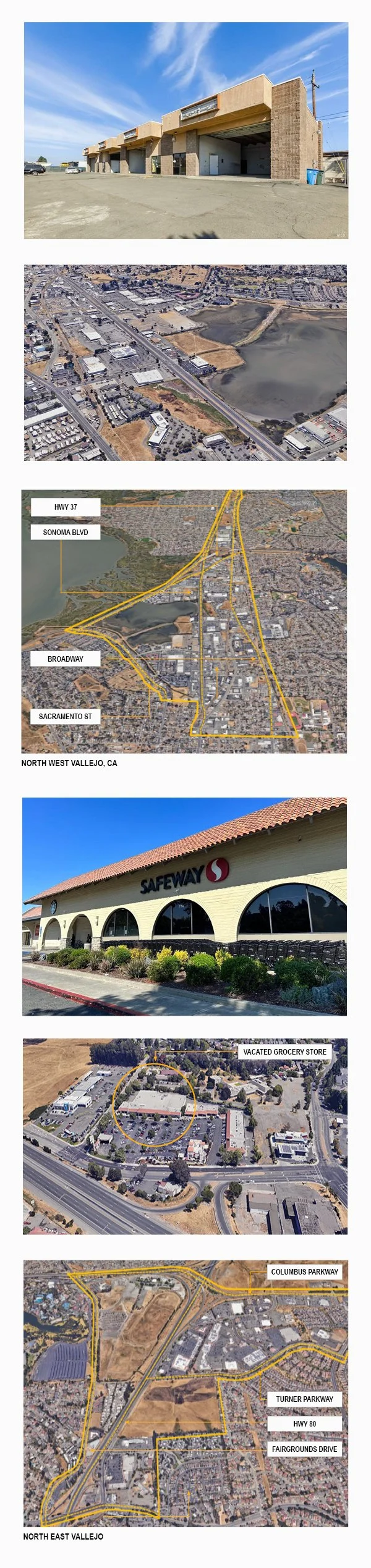
TOP: Side street view of the multi-tenant auto service property at 3424 Sonoma Blvd, Vallejo by Sac Platinum Realty / METROLIST, MIDDLE 1: Source: Google Earth, MIDDLE 2: Street view of the closed Safeway at 774 Admiral Callaghan Ln, featuring mid-century arch windows by Yelp / Commercial Property Archives, BOTTOM 2 Images by Vallejo Community Development Projects Registry / Doc No. May-2019-MP
ABANDONED PROPERTIES AND VAST PARKING LOTS across the northeast and northwest areas of Vallejo are situated in a gorgeous setting adjacent to the San Pablo Bay into which the nearby Napa River (and valley) empties—all that is required is a little billionaire money and a little imagination.
Worse, and more importantly, the way we have built has yielded awful results-- barely livable, ugly and inhumane environments. It should never have happened, not only because of its impact on the natural environment’s well-being, but on ours. It is not clear that we have learned that lesson and therefore abundantly unclear whether the abundance movement--the push to build-- will result in anything better than what we already have other than just more of it, unless as much thought is given to how we build in the 2020s as was given to how to stop it in the 1970s.
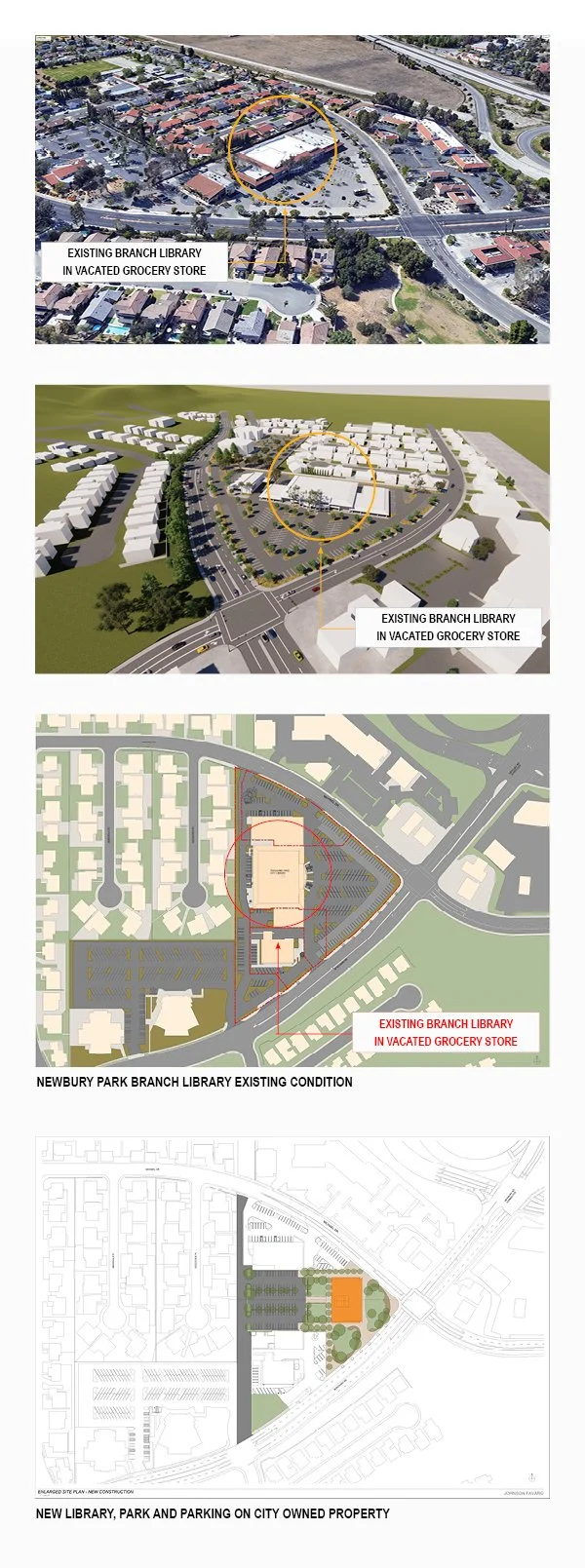
DISTRESSED MID-CENTURY ERA SUBURBAN NEIGHBORHOODS across the state are prime opportunities for redevelopment with the leadership of the public sector, as in this case where the city of Thousand Oaks intends to rebuild their branch library as a catalyst and anchor for a newly densified and vitalized neighborhood. (Thousand Oaks Library Master Plan, Johnson Favaro, 2023)
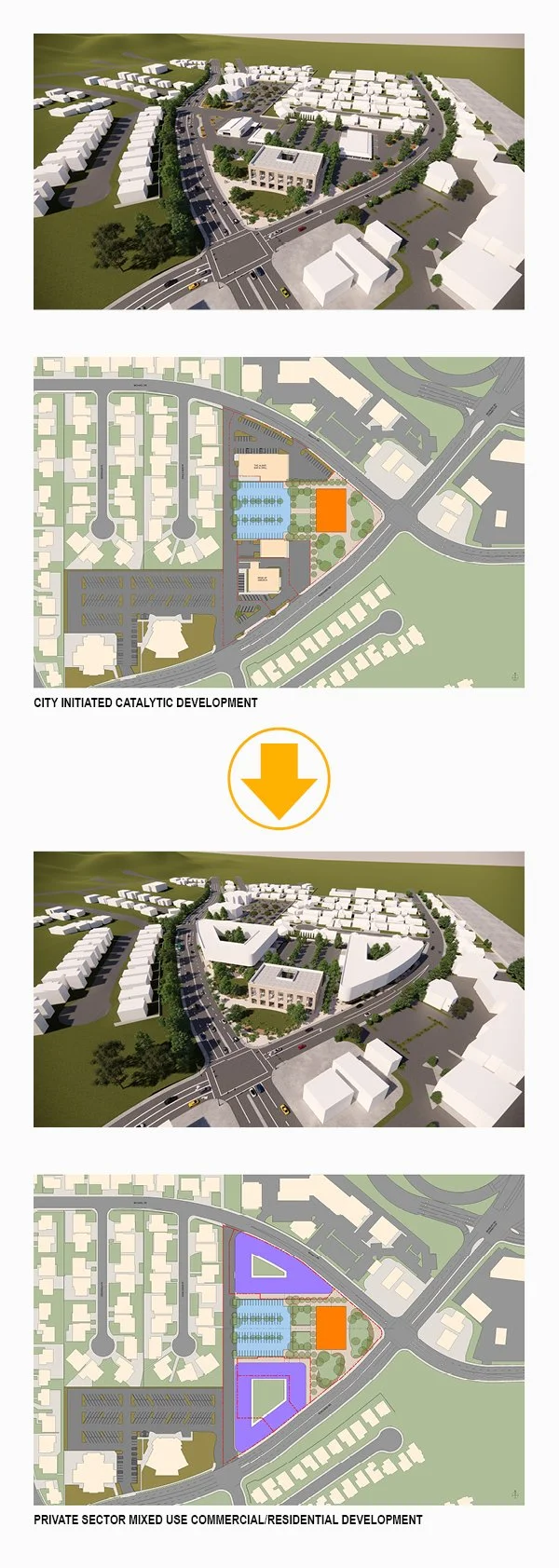
CITY INITIATIVE on city owned property is the key to the successful redevelopment of this important site at the heart of this distressed neighborhood, in this case through the building of a branch library and a park as an anchor for new private sector development (Thousand Oaks Library Master Plan, Johnson Favaro, 2023)
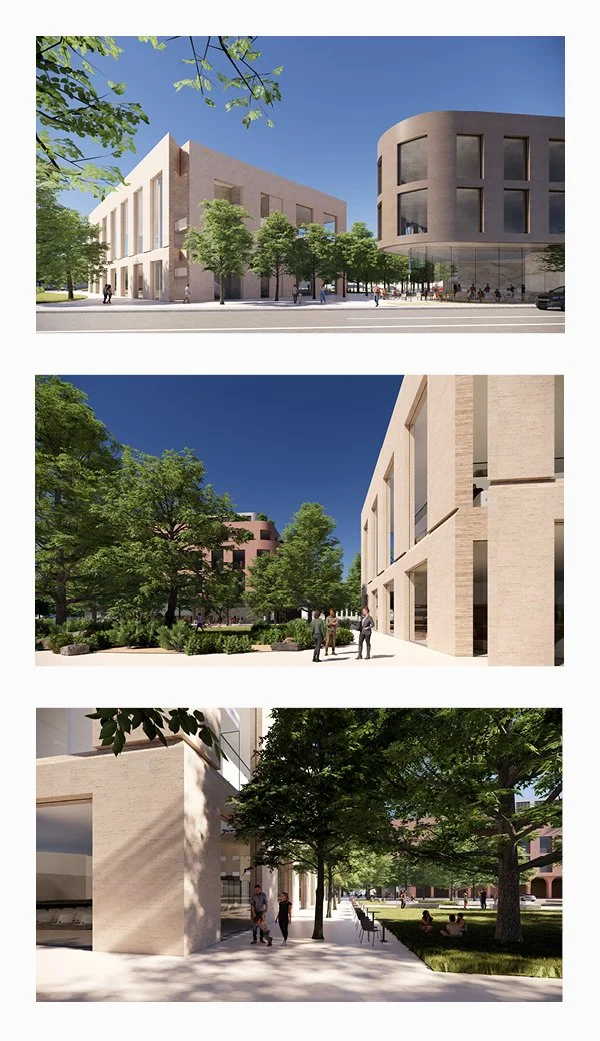
PUBLIC PRIVATE COLLABORATION, initiated by the public sector is the only way to bring cities back from the brink, the private sector having proven itself utterly incapable of it for almost a century. (Thousand Oaks Library Master Plan, Johnson Favaro, 2023)