
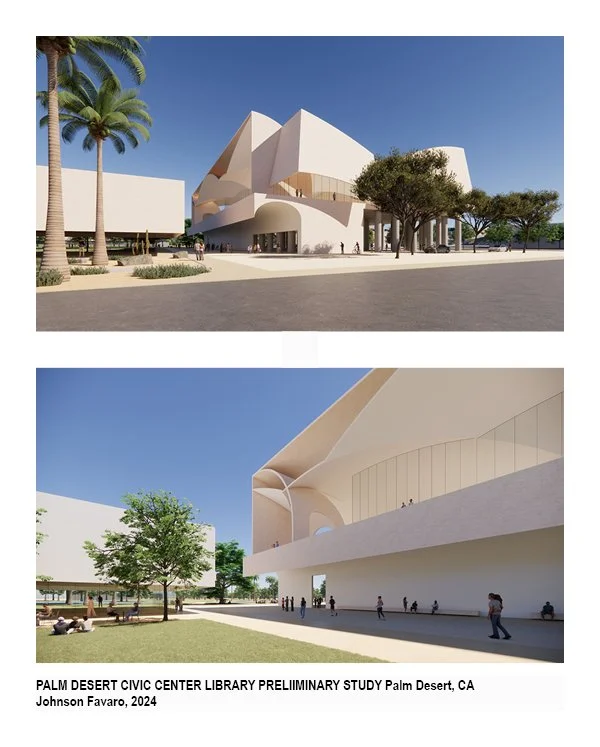
UNINFORMED LEADERSHIP This study for the redevelopment of a municipal civic center was hijacked by a micro-managing public works director who manipulated a naïve city council who was itself captured by an old-school mentality focused on arbitrary budget numbers having nothing to do with accomplishing meaningful outcomes for its citizenry.
You will hear it said in architecture school, only half-jokingly, that it is only under emperors, kings and popes that good cities ever get built. And while it has been the mission of this practice to demonstrate that excellent public architecture can be realized within a democracy, some days it’s easy to wonder if life as an architect wouldn’t be better under more hierarchical circumstances.
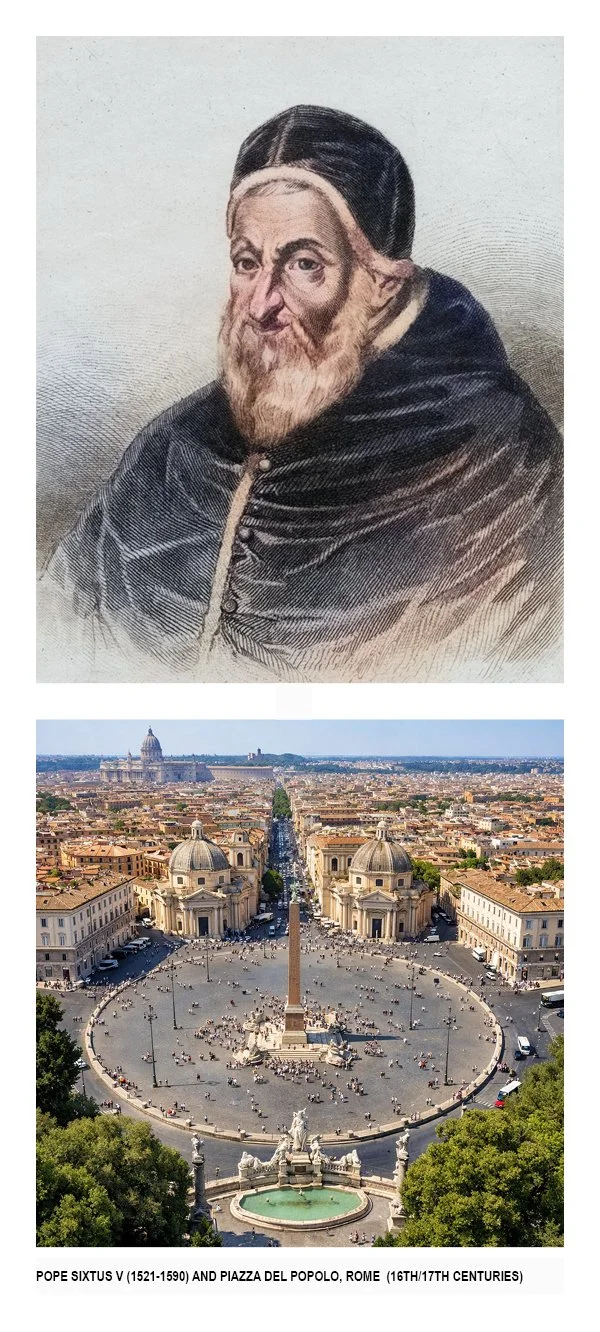
INFORMED LEADERSHIP I The papacy was at the height of its powers in 16th century Rome when it was also interested in applying all that had been learned in the artistic and architectural climate of the time to a renewal of the city.
IMAGES AVOBE: Shutterstock
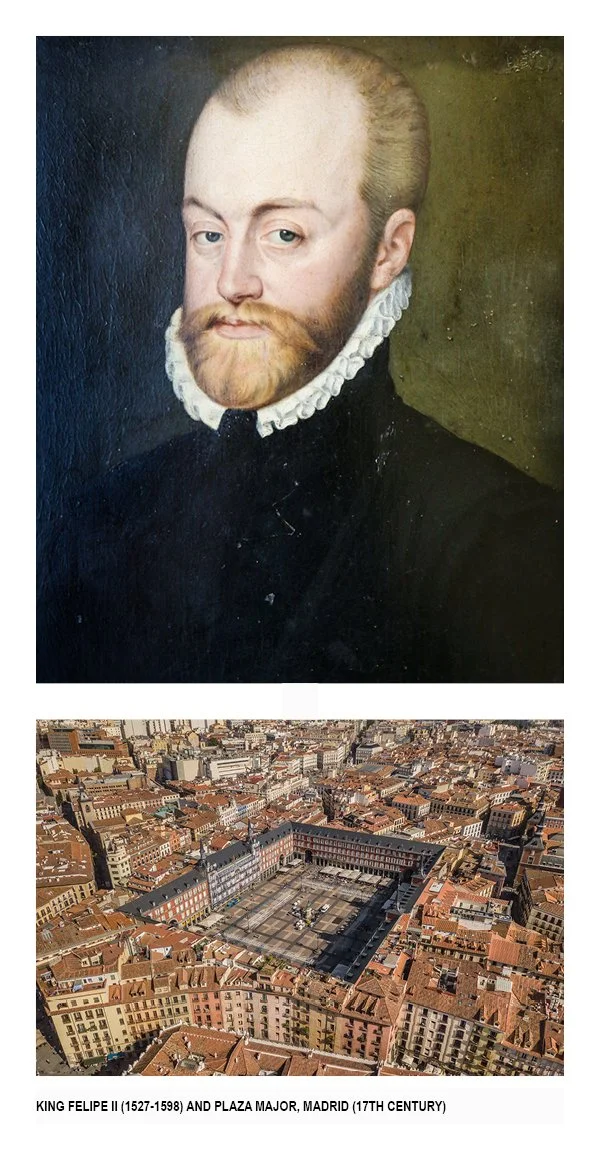
INFORMED LEADERSHIP II The lessons of the urban interventions of 16th century Italy spread across Europe inspiring monarchical governments such as that of King Felipe II who initiated and funded several large-scale urban projects in Madrid.
IMAGES AVOBE: Shutterstock
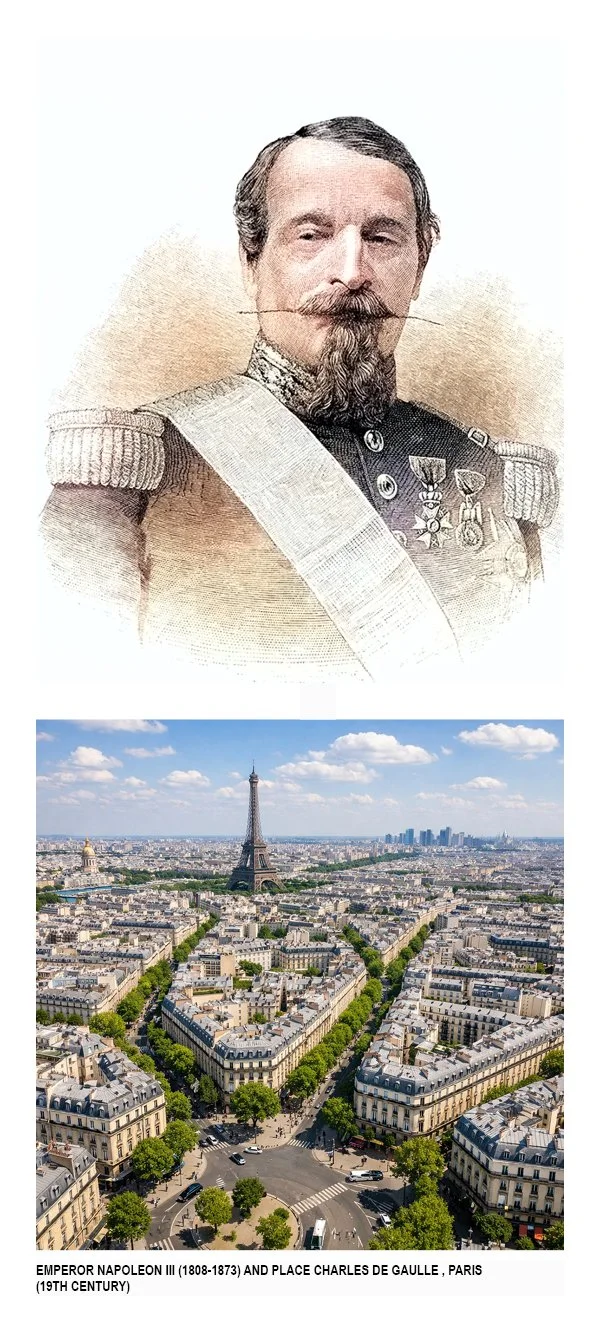
INFORMED LEADERSHIP III With almost single-minded determinism the emperor Napoleon III and his architect Baron Haussman transformed Paris from a medieval backwater into the theatrical network of boulevards we know today.
IMAGES AVOBE: Shutterstock
We have in the 250 years of our republic built some decent stuff, but throughout most of the 20th century we mostly built tracts of houses, shopping centers, office towers and highways all of which are under stress, their upkeep we now realize costly and unsustainable -- and, given the environmental and psychological damage, hardly worth it. None of that--what we think of as having been accomplished by the “free market” --could have happened without immense government effort to fund and build the supporting infrastructure. It was an ideologically driven and expensive effort intent on subsidizing one way to live. There was nothing “free” about it.
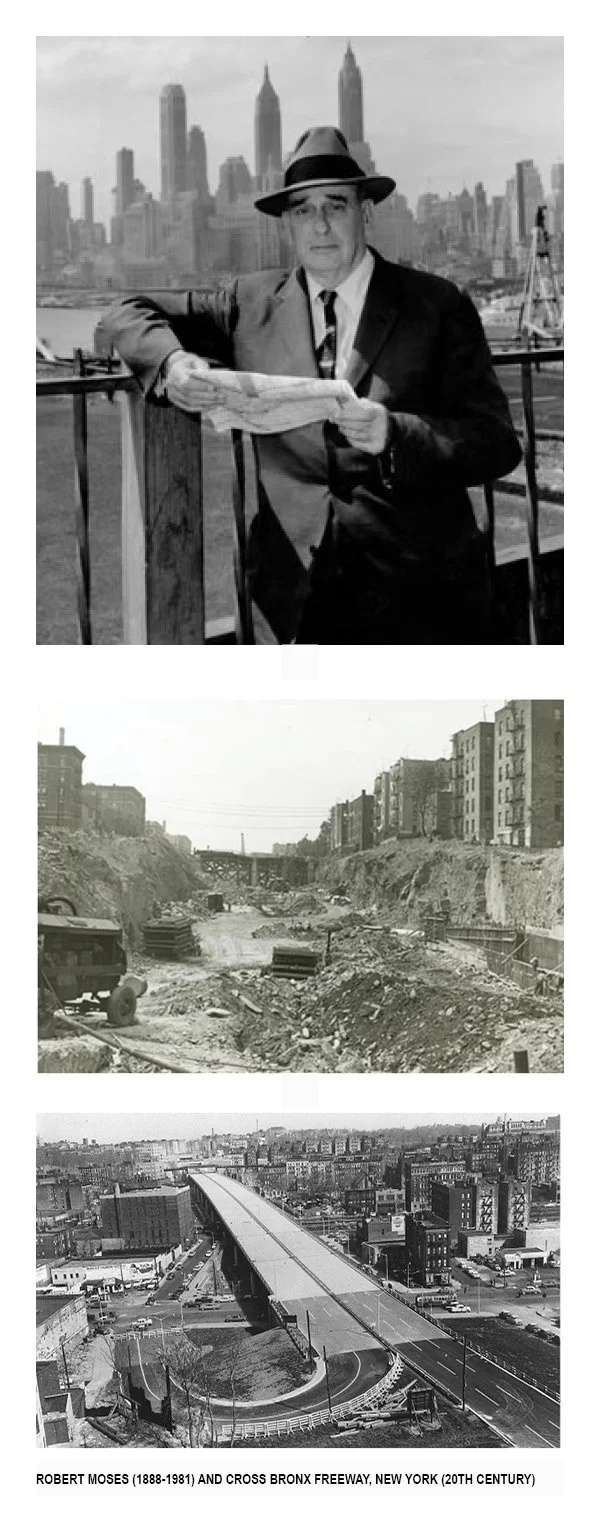
STRONG LEADERSHIP, BAD IDEA I In the post war years in the United States governments were invested with immense authority—almost equivalent to the monarchs of the past—and through fiat able to impose their will on cities in the form of mostly wrongheaded and destructive interventions such as Robert Moses’ Cross Bronx Expressway.
ABOVE IMAGES: Robert Moses, photograph by C. M. Stieglitz, New York World-Telegram and Sun Collection, Library of Congress.
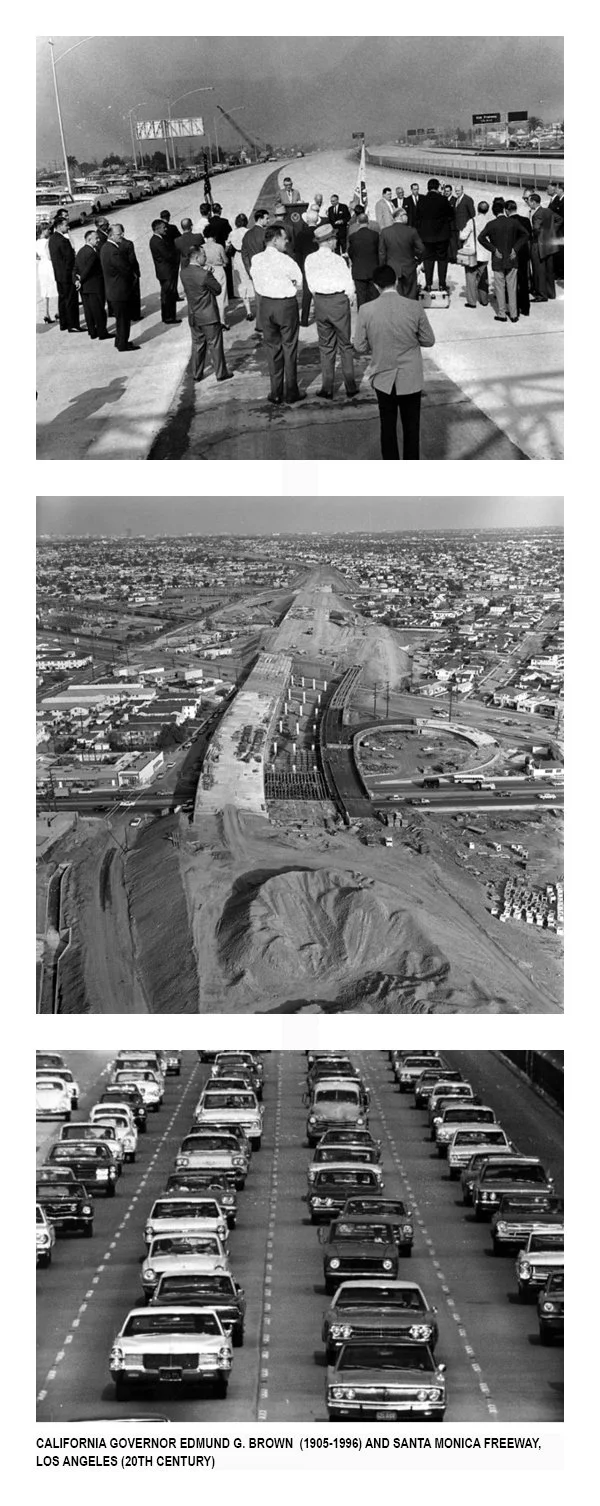
STRONG LEADERSHIP, BAD IDEA II In the 1950s and 60s in southern California Governor Edmund G. Brown initiated and funded (with the help of the federal government) a statewide campaign to drop highways through and between cities such as Los Angeles through which the Santa Monica Freeway was rammed, decimating neighborhoods many of which have yet to recover.
TOP IMAGE: Governor Edmund G. “Pat” Brown at the opening of a Santa Monica Freeway segment near downtown Los Angeles, August 16, 1962. Herald-Examiner Collection, Los Angeles Public Library. MIDDLE IMAGE: Santa Monica Freeway under construction southwest of downtown Los Angeles. Los Angeles Examiner Collection, USC Libraries. BOTTOM IMAGE: Traffic on the Santa Monica Freeway, 1970. Photo Collection, Los Angeles Public Library.
In the 1950s and 60s highways were extended across undeveloped lands and rammed through cities, while private properties were taken under a law written into the Fifth Amendment of the U.S. Constitution known as eminent domain, the origins of which date back to Roman law. The “Takings Clause” of our constitution states that private property can be seized if properly compensated and intended for public “use” (1789)—a term that was later interpreted by the Supreme Court to mean “purpose” (1954).
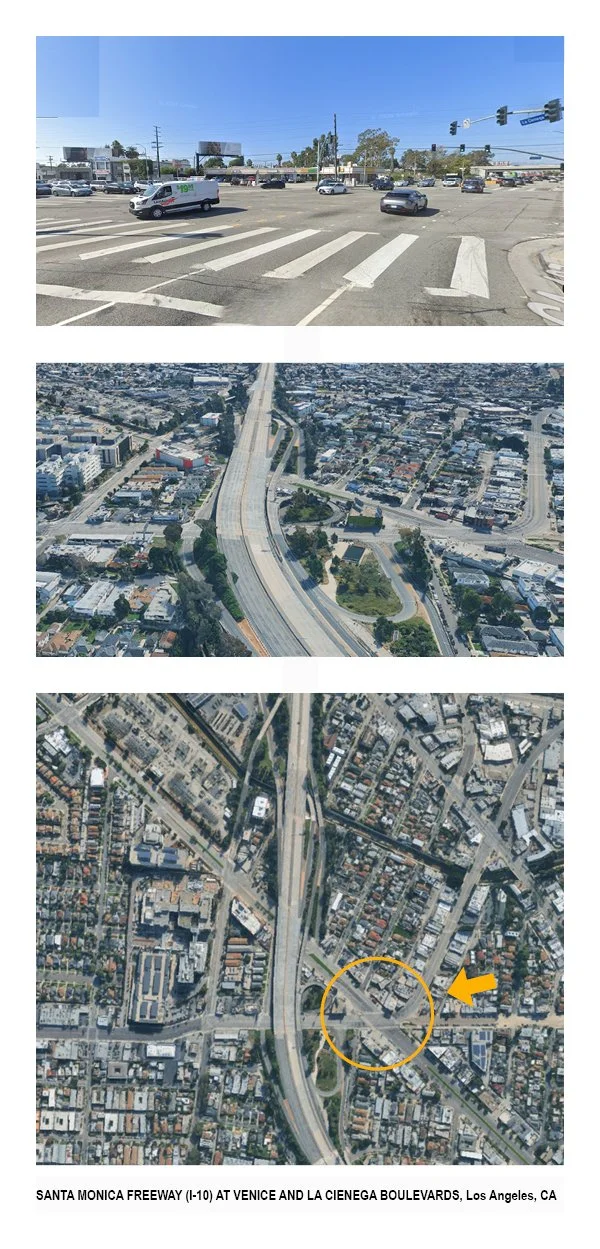
BAD IDEAS AND THEIR CONSEQUENCES I Today, at the heart of metro Los Angeles at the intersection of the Santa Monica Freeway, Venice and La Cienega Boulevards acres of the city are paved over in concrete and asphalt resulting in not just a lot of ugliness and un-livability but also immense opportunity costs associated with the strangling of a city as it was emerging from its infancy.
ABOVE IMAGES: Intersection of Venice Boulevard and La Cienega Boulevard near the Santa Monica Freeway (I-10), Los Angeles, California. Source: Google Maps/ Earth.
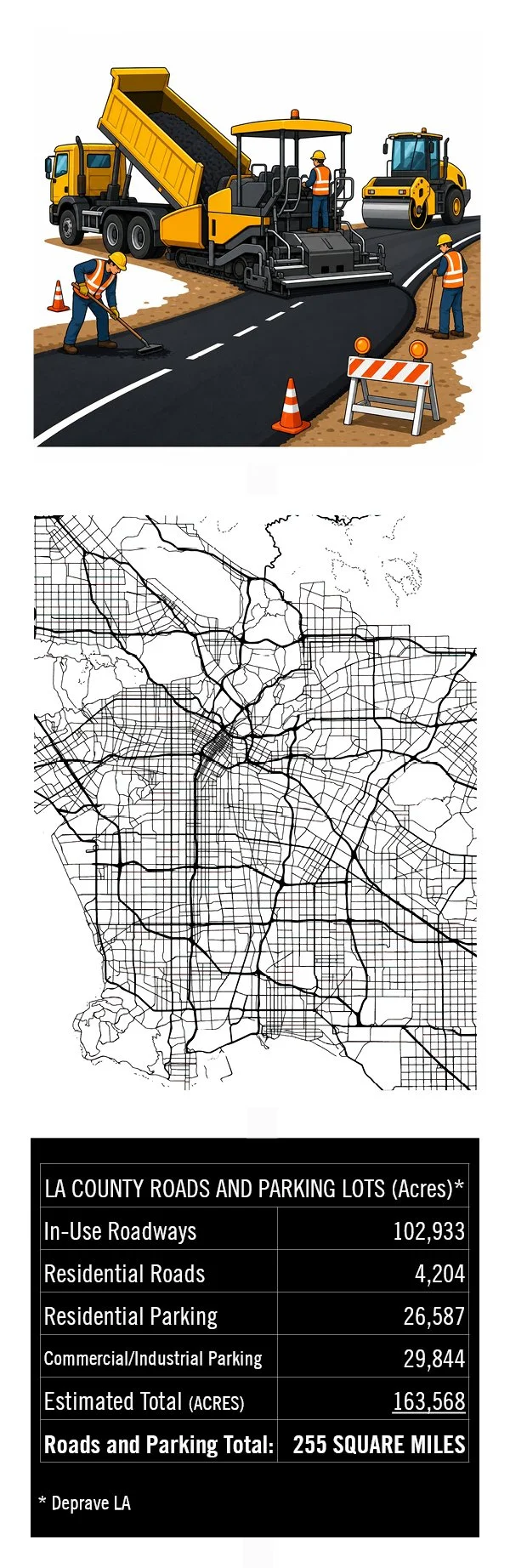
BAD IDEAS AND THEIR CONSEQUENCES II Municipal budgets within Los Angeles County are now buckling under years of deferred road maintenance and repairs resulting in their inability to fund the building of civic and social infrastructure such as libraries, recreation and community centers.
TOP 2 IMAGES: Shutterstock, BOTTOM IMAGE: Accelerate Resilience L.A. and Hyphae Design Laboratory, DepaveLA: Turning Pavement into Plants—A Block-by-Block Approach to Adapting L.A., January 2026.
We thought at the time that highways would provide immense public purpose in that they would support the way of living that we thought then was, even though we know now is not, optimal. And while many private individuals benefited, such as the owners of land under future suburbs and the makers and drivers of cars who would live in those suburbs, others had their homes and neighborhoods sold out from under them with little say in the matter.
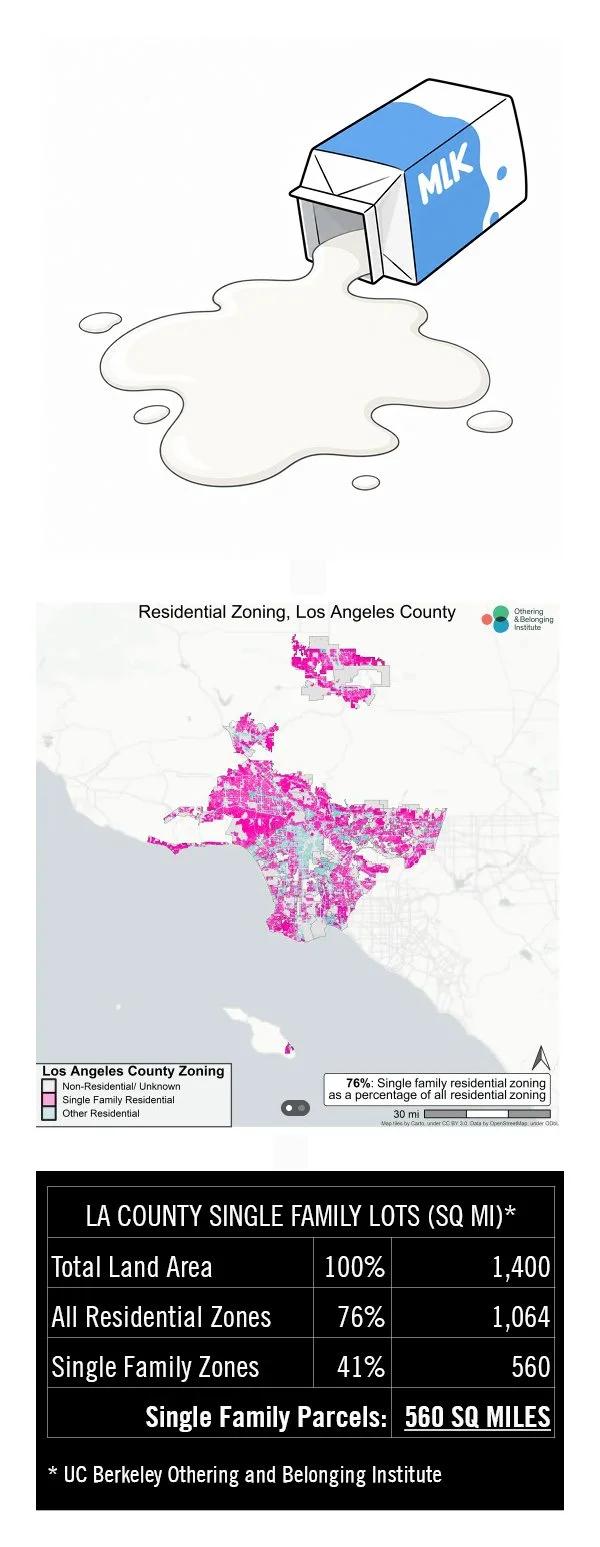
BAD IDEAS AND THEIR CONSEQUENCES III The fragmentation of previously consolidated land resources into individually owned 50 FT x 150 FT parcels presents challenges for the transformation of the L.A. metropolitan area into livable, sustainable and healthy urban fabric which can now only be done through imminent domain.
ABOVE IMAGE: Shutterstock, BOTTOM IMAGE: UC Berkeley Othering & Belonging Institute, Single-Family Zoning in Greater Los Angeles.
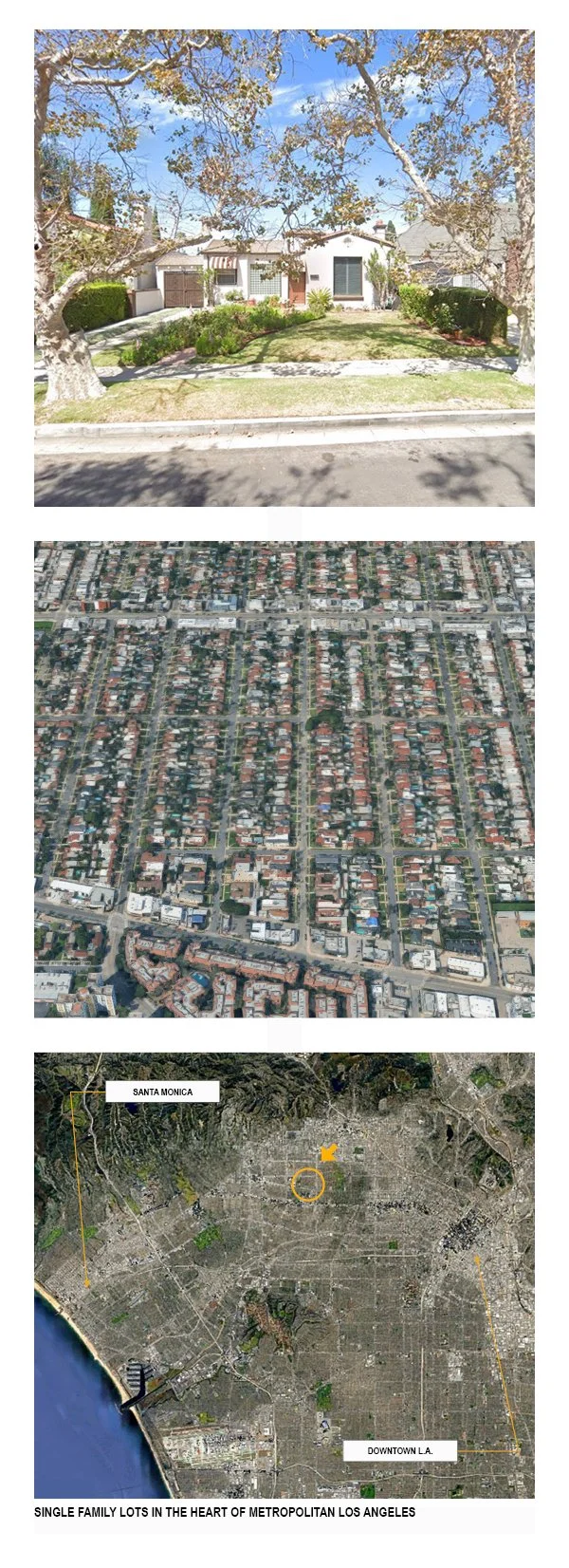
BAD IDEAS AND THEIR CONSEQUENCES IV That there are 50 FT x 150 FT lots at the heart of the L.A. metropolitan area with single-story, single-family homes on them is patently absurd.
TOP IMAGE: Google Street View, BOTTOM 2 IMAGES: Google Earth.
Estimates vary but of the 1,400 square miles within incorporated Los Angeles County 40% or 560 square miles are individually owned residential lots (typically 50 ft x 150 ft). And another 340 square miles-- more than the 230 square miles that comprise the area of Chicago--are captured by roads and parking lots, most of them owned by federal, state and local governments. Through this combination of public investment (land bought) and private divestment (land sold) Los Angeles became--except for its climate and geography--an ugly and unhealthful place, even as it also became a lively and vital one. And yet now we know, there is no way to transform Los Angeles into a beautiful and healthful place while maintaining its vitality other than changing our land use patterns. And there is no way to do that other than through the public sector because the private sector is incapable of it.
In other words, if in the middle of the 20th century we were through government authority able to create this mess, then in the 21st century can we through that same authority repair it?
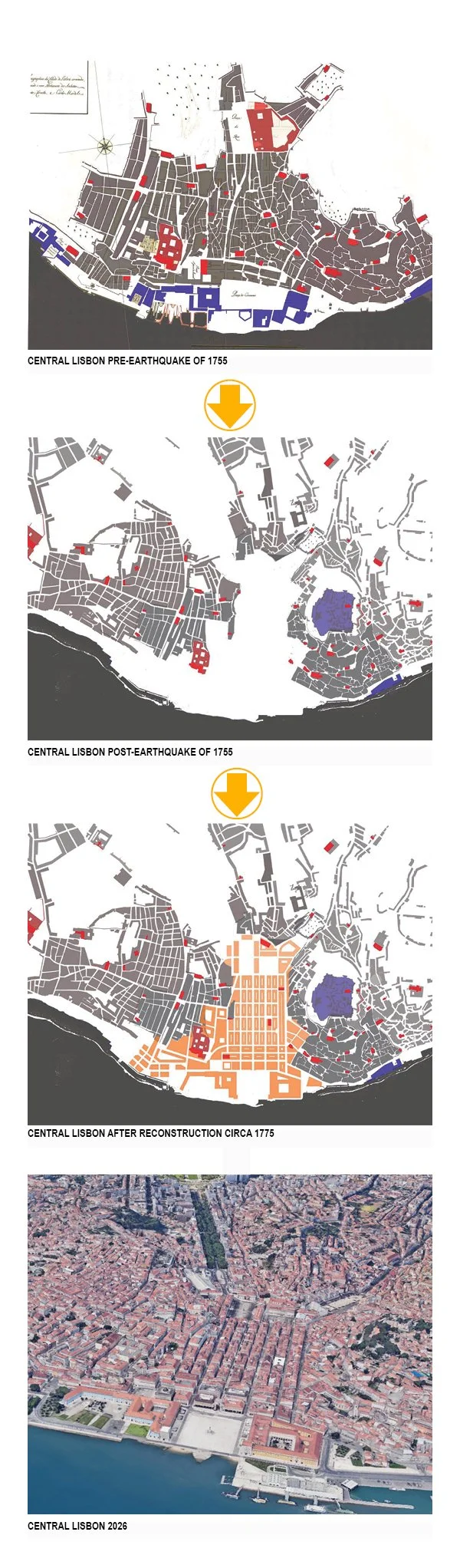
URBAN DESIGN AND PROSPERITY I In the 18th century sound urban design principles guided the rebuilding of central Lisbon in a coherent manner that required first control of the entire site then its redistribution back into private hands.
TOP 3 IMAGES: Adapted from Manuel da Maia’s pre-earthquake plan of Lisbon (1756) and the reconstruction plan by Eugénio dos Santos and Carlos Mardel (1758), Museu de Lisboa. Historical cartography in the public domain. BOTTOM IMAGE: Google Earth.
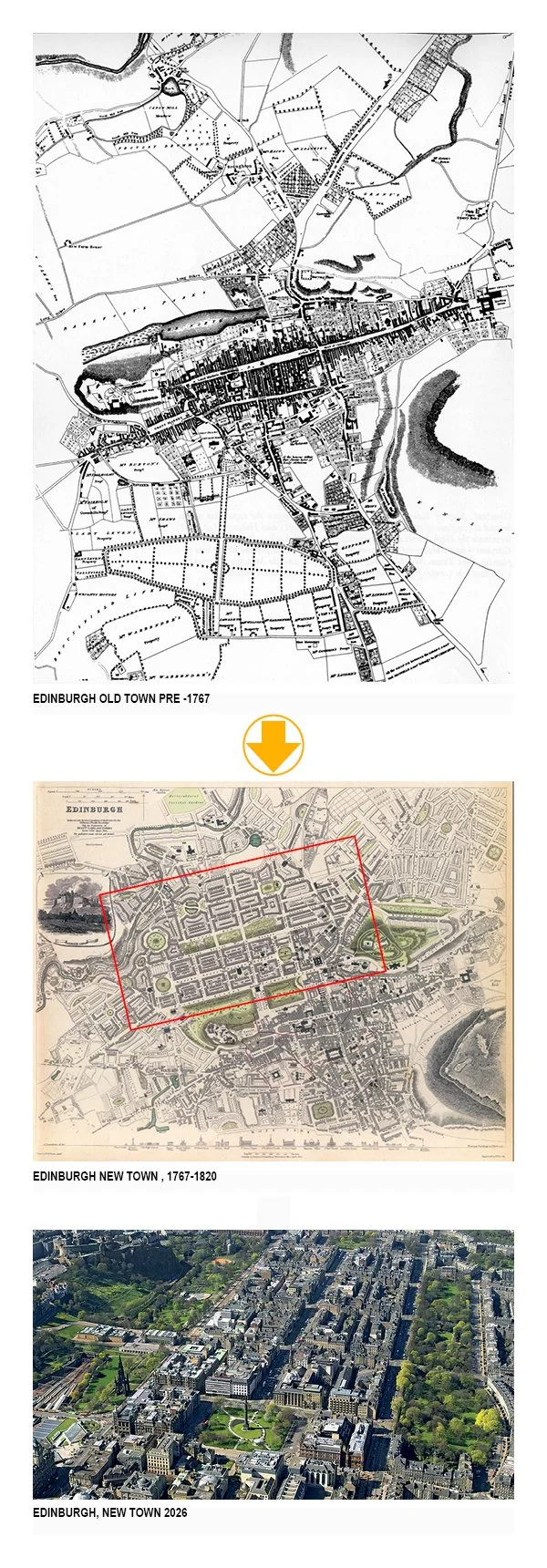
URBAN DESIGN AND PROSPERITY II The expansion of Edinburg in the 18th century onto unoccupied agricultural land was first comprehensively laid out according to sound urban design principles and then distributed into private hands.
TOP IMAGE: John Rocque, Plan of Edinburgh and Its Environs, 1764. Historical map, public domain. MIDDLE IMAGE: John Tallis, Edinburgh, circa 1767–1820; map drawn and engraved by John Rapkin, with illustrations by Henry Winkles. Historical map, public domain. BOTTOM IMAGE: Google Earth.
By 1970 it had become clear that both the process and the outcome of government intervention in and between cities were not working. But instead of attending to the outcome we focused on the process. The heavy-handed, environmentally destructive and socially unjust approach to the building of public infrastructure in the mid-20th century coupled with increasingly strident emphasis on individual rights across the latter half of the 20th century and into this one—and, importantly, our eagerness to sue on behalf of them-- distracted us into thinking that what mattered most was not the public good that cities, properly designed, could deliver but instead the inviolability of individual rights and private ownership. So much so that the authority of government and its eminent domain powers have been curtailed, their constitutional validity even called into question.
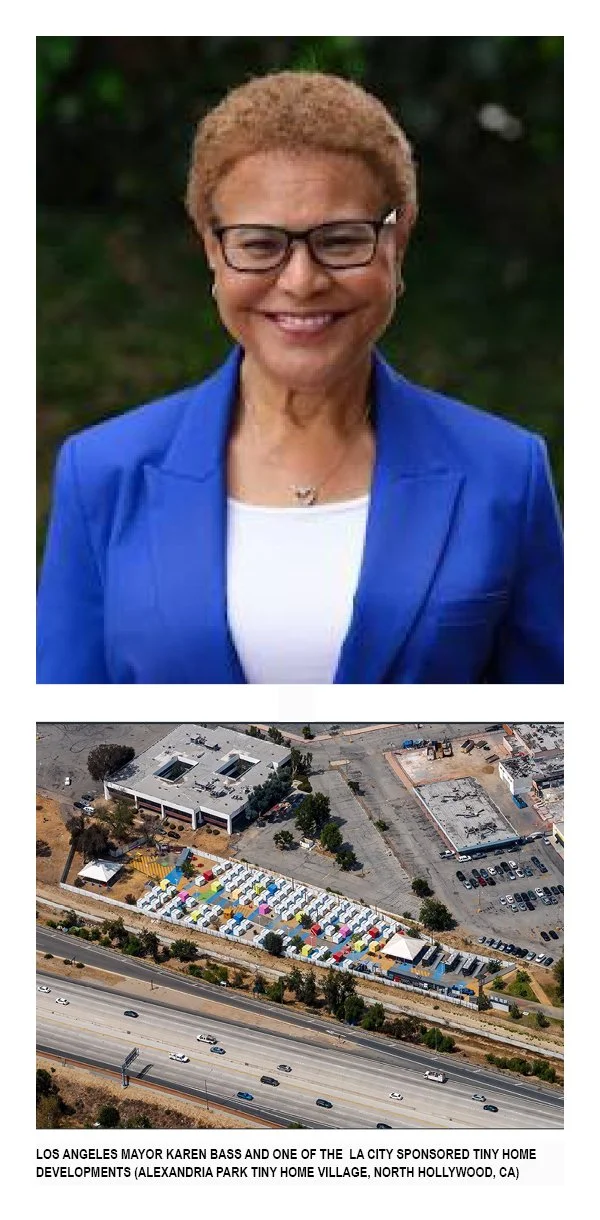
UNINFORMED LEADERSHIP I Political leadership in Los Angeles today focuses on problems that could have been mitigated if not entirely avoided by sound pre-20th century urban design principles that were abandoned in the 20th century-- precipitating, for example, the lack of affordable housing and associated social challenges.
TOP IMAGE: Portrait of Karen Bass, Source Facebook. BOTTOM IMAGE: Mark Holtzman / West Coast Aerial Photography, Inc.
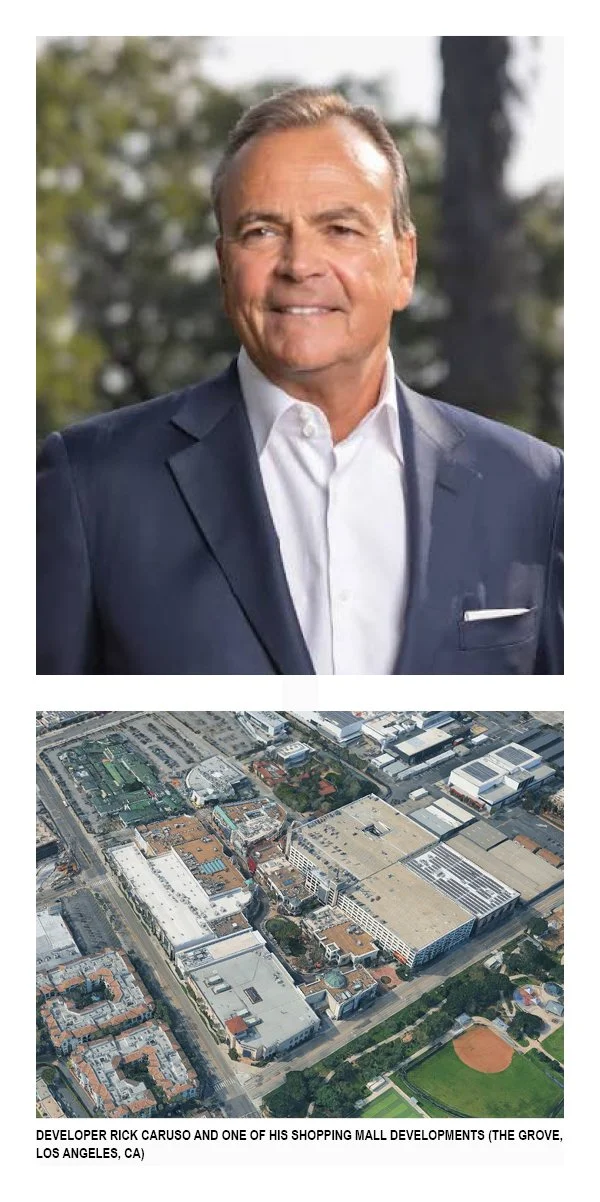
UNINFORMED LEADERSHIP II A real estate market that privatizes the public realm as a place to buy stuff first and socialize second, succeeds in cities where there are no other choices.
TOP IMAGE: Rick Caruso mayoral campaign, 2022. Source Facebook. BOTTOM IMAGE: Google Earth.
All parents know that among the first words their young children express are two: “no” and “mine.” These are the utterances of a fledgling self and nascent individuality that with socialization, education and maturity we hope grows into an awareness that we are necessarily individuals among individuals, that we have to share, and in the end none of us owns anything.
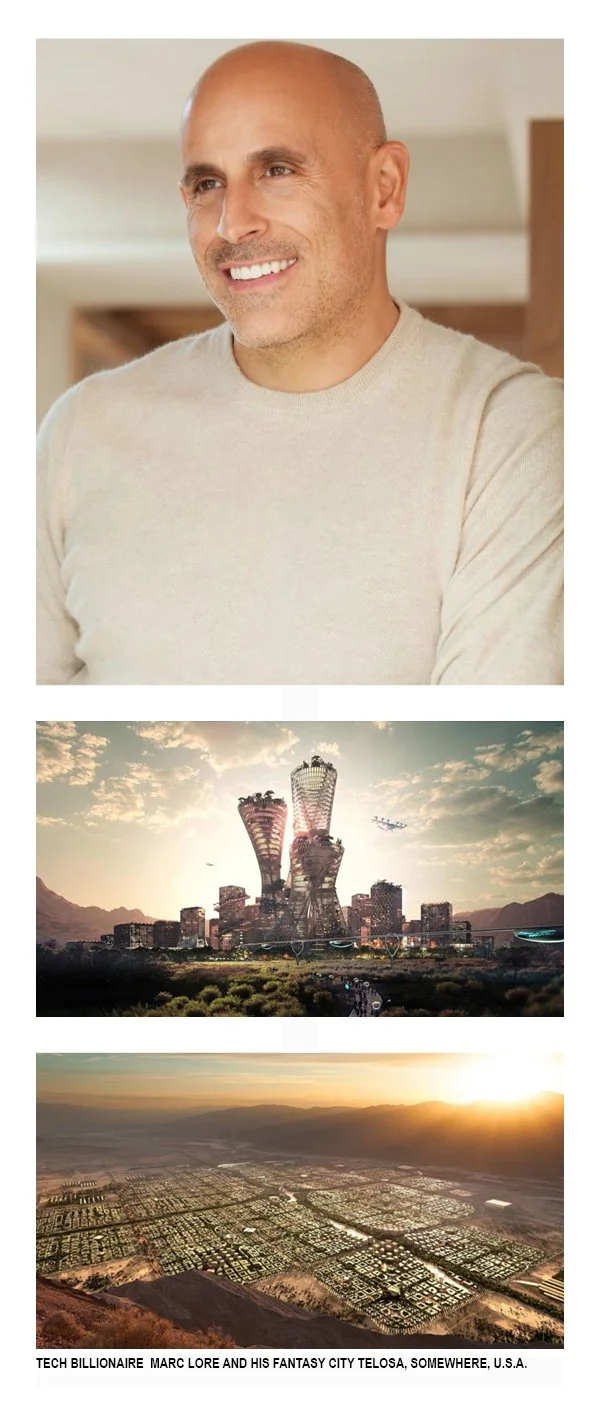
UNINFORMED LEADERSHIP III Billionaire tech bros that strike it rich selling diapers online think they know how to “disrupt” five thousand years of human experience in urban design.
ABOVE IMAGES: Marc Lore portrait—courtesy of the Telosa Community Foundation. BOTTOM 2 IMAGES: Telosa concept renderings—© BIG–Bjarke Ingels Group and Bucharest Studio, courtesy of BIG and Bucharest Studio.
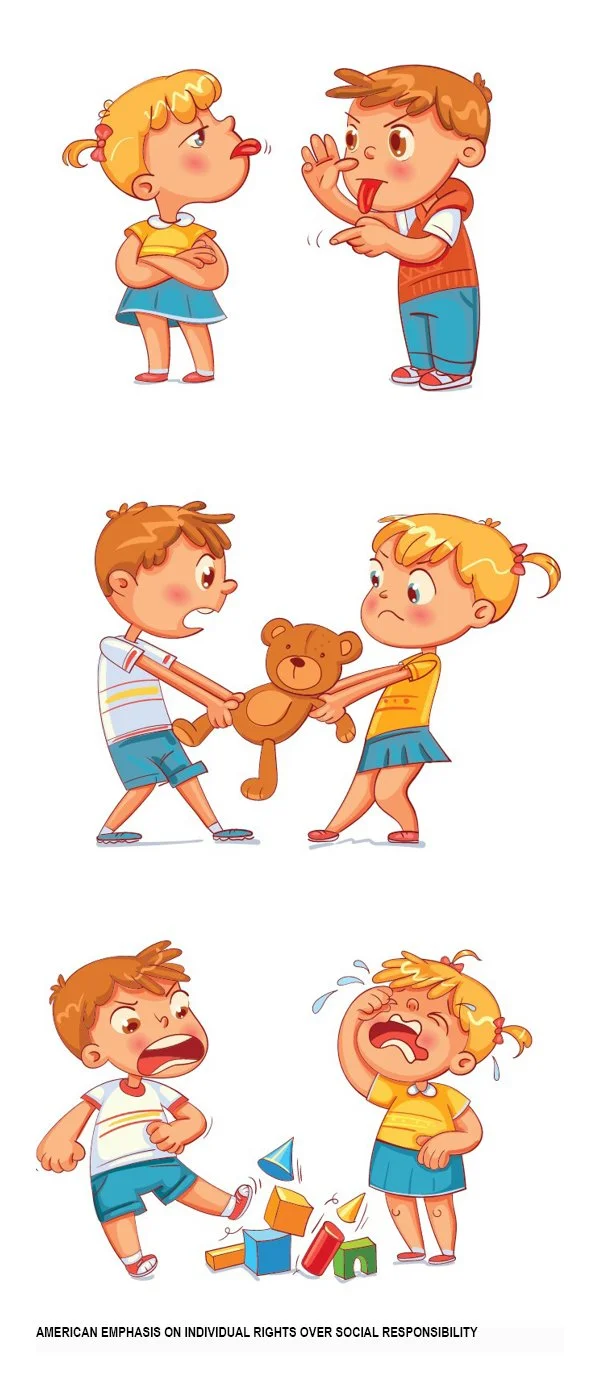
NO LEADERSHIP Increasingly individualistic, atomized and litigious we have over the last century become incapable of building the things that matter.
IMAGE AVOBE: Shutterstock
We are not children and we should not act like it. To repair our cities, we must as a society move beyond our culture of infantile self-centeredness and our governments must stop rewarding childish possessiveness. The repair of our cities will require faith in government authority on behalf of the public good— that is, not retreat from but instead doubling down on imminent domain.
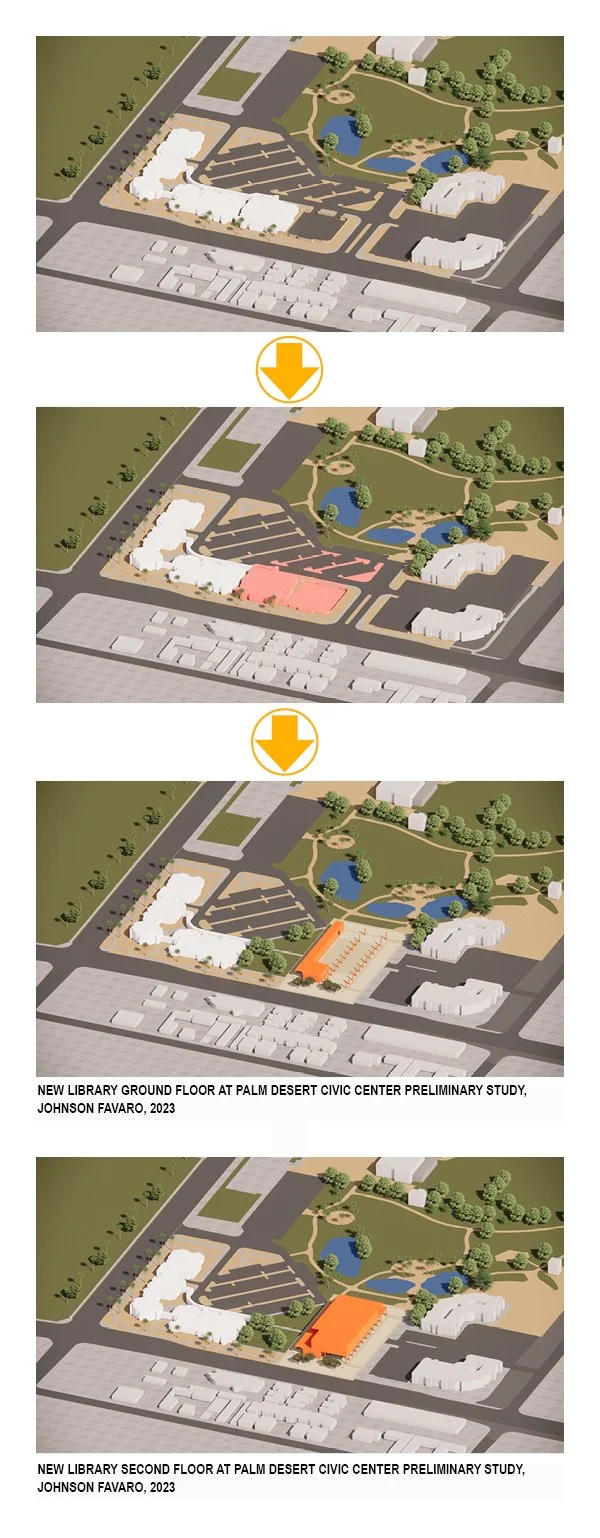
INCREMENTAL Individual building projects accumulate intelligently only in the context of an overall urban design scheme.
The multitude of privately held parcels of land will have to be bought back, perhaps funded through the appropriation of adolescent billionaire money, assembled with the ample lands already publicly held, currently wasted on roads and parking lots, then reshaped to accommodate the kinds of compact, humane urban environments that we have known to work for centuries and which were under emperors, kings and popes once possible.
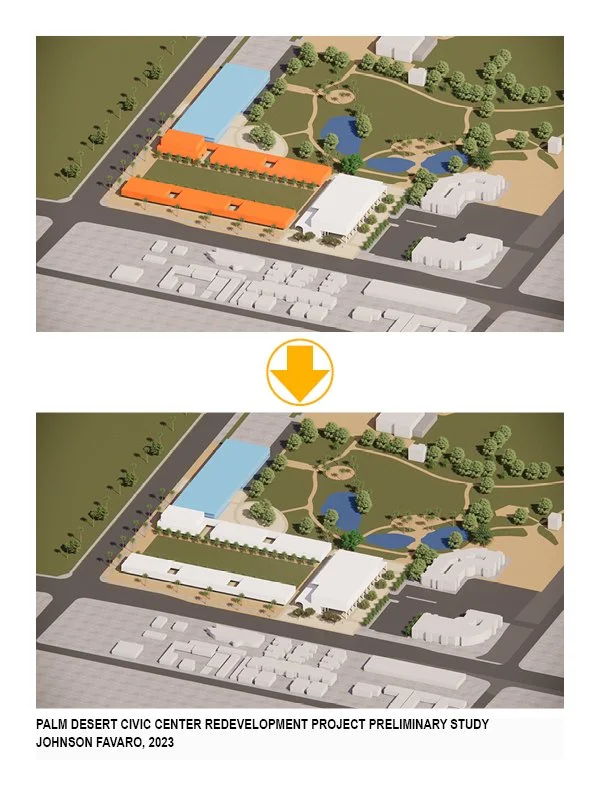
COMPREHENSIVE An overall urban design scheme is the first step after which individual building projects follow.
Crucially, the repair of our cities will depend on neither plans nor markets but instead on design, led with dispassion and equanimity by architects whose capabilities are uniquely suited to this effort and who are used to working for governments on behalf of the communities they serve. There is no other way. And even if in our time -- in this culture of misappropriated democracy, misplaced faith in the infallibility of markets, and our misshapen world view that puts rights before responsibilities-- none of this is now possible, in time we are sure it will be.
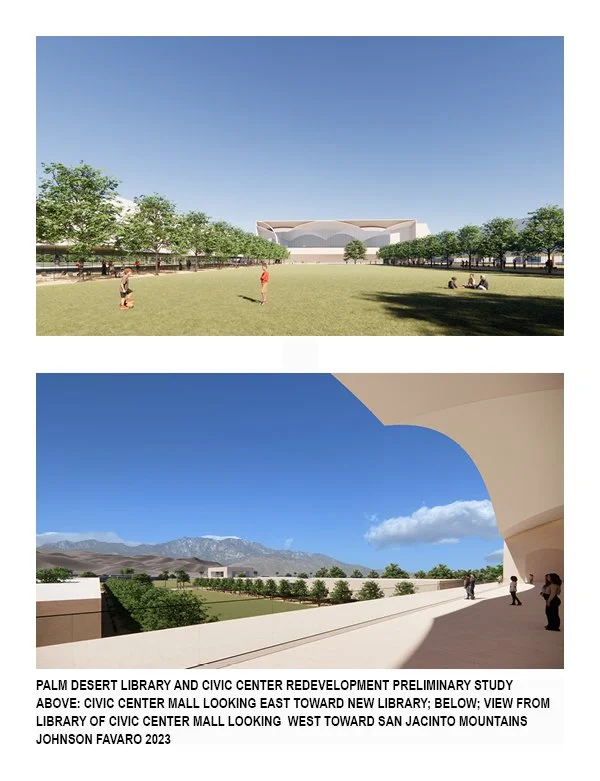
IMBEDDED Urban design situates buildings in relationship with each other and their surroundings.
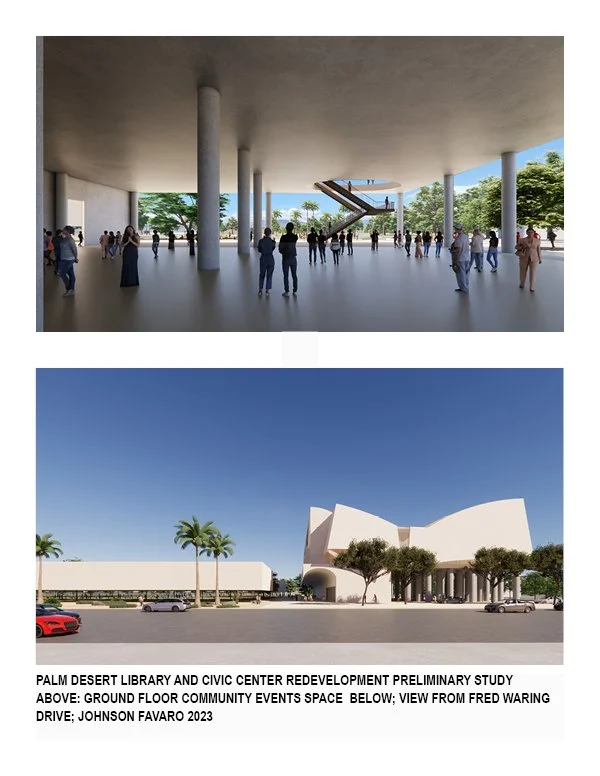
AT HOME Urban design suggests ways for buildings to respond appropriately to their climatic and geographic circumstances.