
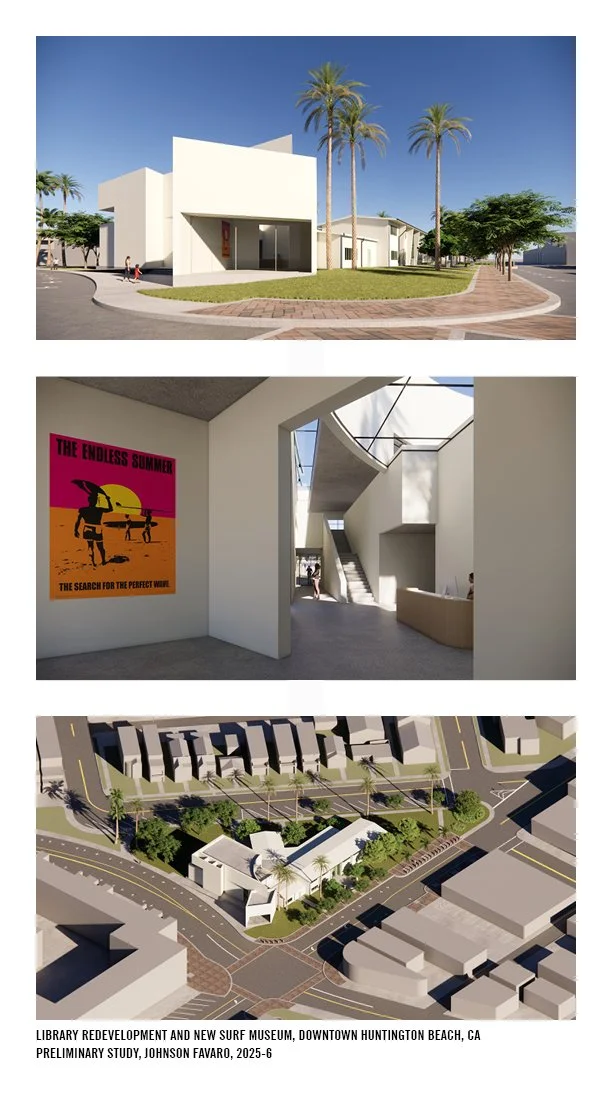
NECESSITY NOT LUXURY One of five sites in Huntington Beach that were a focus of the city-wide master plan, the Main Street Branch was the first to be built in the city. To better serve the historic downtown neighborhood it now requires complete renewal and expansion.
We recently completed a yearlong effort whose purpose was to craft a master plan for an enhanced and expanded library system for a city of 200,000 here in southern California. The effort entailed numerous encounters with the community, stakeholders, city leadership and staff. It was stopped in committee before going to city council with the criticism that both the effort and we were and are out of touch with the unique character and values of the city. It was easy not to take it personally as the harsh words were mostly cover for what was more likely an ideological and political agenda not dissimilar to what is going on across the country.
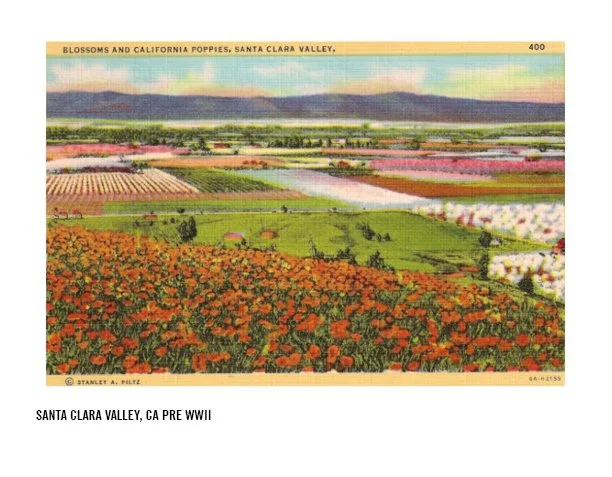
LOST FOR GOOD The Santa Clara Valley, now Silicon Valley, in northern California was in the early part of the 20th century one of the largest agricultural producers in the world.
IMAGE: Santa Clara Valley, CA, Pre WWII Postcard - Stanley A. Piltz
The experience, while extreme (and extremely disappointing), is not unfamiliar to us. When faced with investing in the public interest, when seemingly large amounts of taxpayer money are involved, people struggle to agree on how best to invest, or whether to at all. (Although, the dollar amounts are relatively minor compared to what Americans spend on themselves.) As architects, numbers, facts and data are crucial in our line of work, but ever more so are personalities, values and emotions. We’ve come to accept that not everyone can be pleased but we are most times nevertheless able to get through projects with all their challenges and come out on the other side with most people pleased.
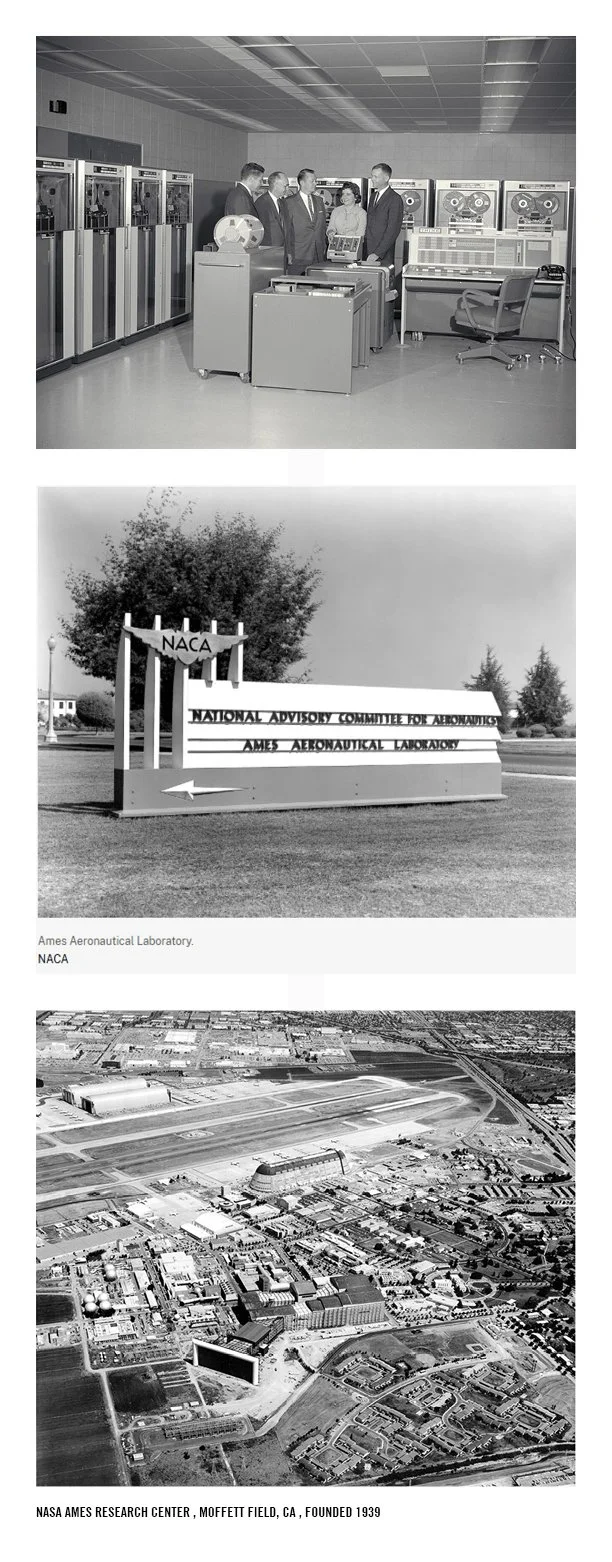
AUSPICIOUS BEGINNINGS During WWII NASA established its Ames Research Center at Moffett Field in the Santa Clara Valley principally to improve the quality of the military’s aircraft.
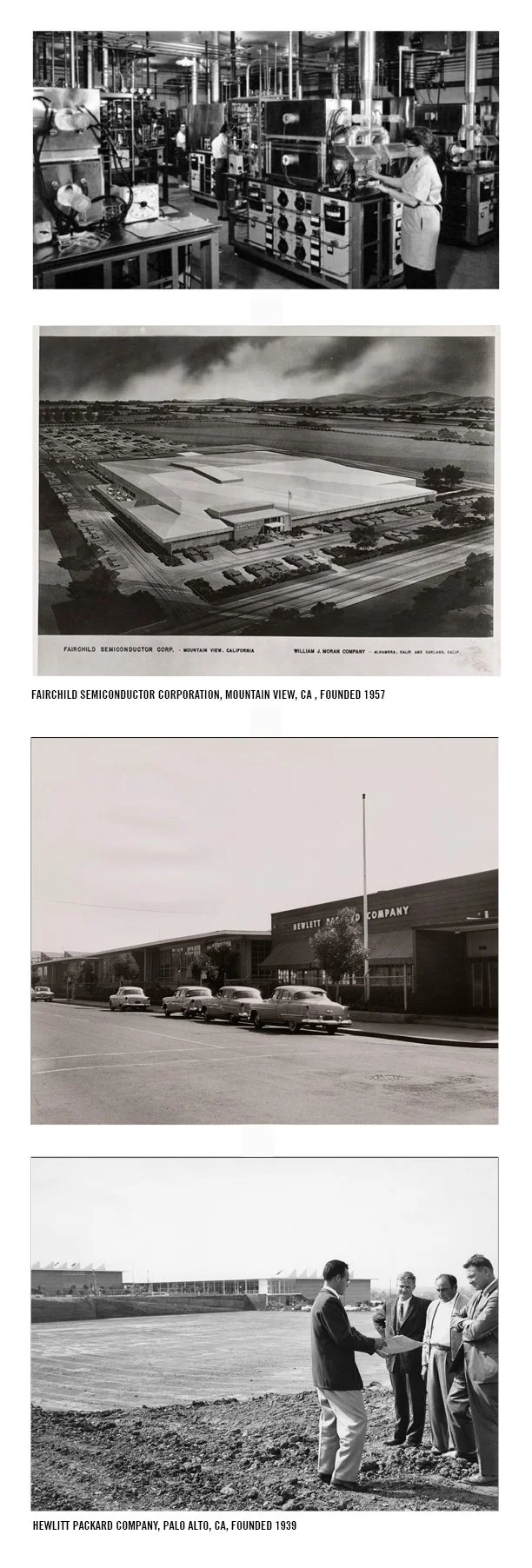
PRIVATE INITIATIVES In the 1950s attracted by geography, climate, the presence of NASA and two world-class research universities (Stanford and UC Berkeley) engineering companies such Fairchild Semiconductor and Hewlett Packard began to establish businesses putting the valley at the cutting edge of computer science research and development.
TOP: NASA Ames Research Center, MIDDLE: NACA / NASA Ames Research Center, BOTTOM: NASA Ames Research Center.
Where I went to high school and college in the 1970s, the Santa Clara Valley in northern California, prior to 1960, was the single largest agricultural producer in the world—and one of the most beautiful places in the world. It was carpeted almost end-to-end in fruit orchards and vineyards and framed by rolling hills that are emerald in winter and gold in summer.
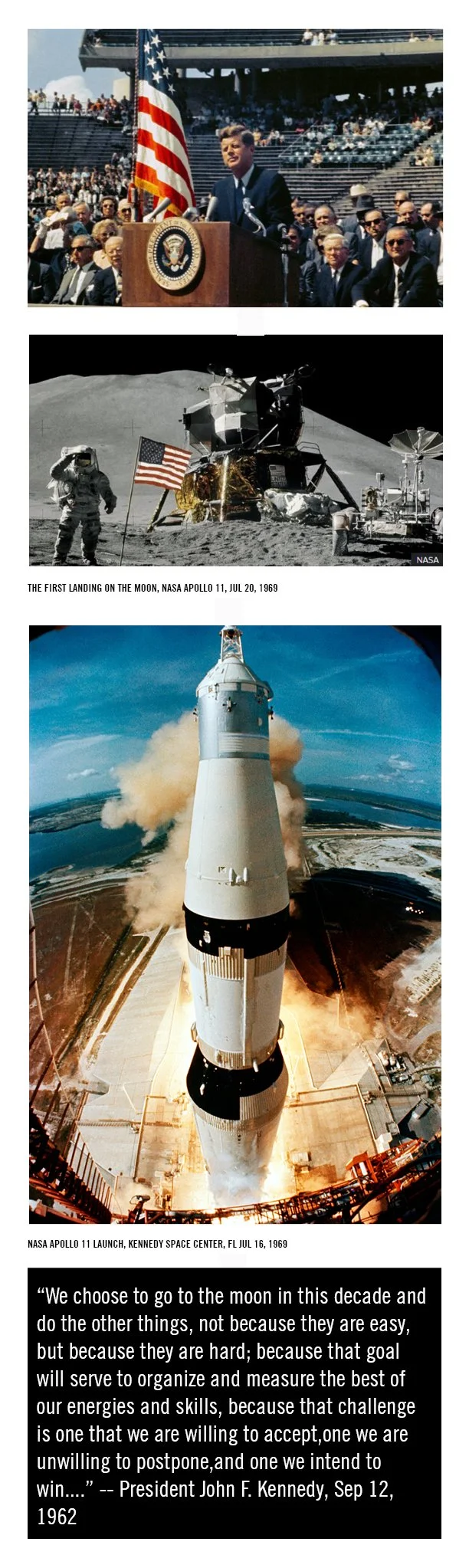
NATIONAL STAGE When in 1962 President Kennedy committed the nation to the moonshot mission the federally run Ames Research Center and privately run companies like Fairchild Semiconductor played a central role.
TOP: John F. Kennedy Presidential Library and Museum, President Kennedy at Rice University, September 12, 1962; MIDDLE: NASA, Apollo 11 Lunar Surface, July 20, 1969; BOTTOM: NASA, Apollo 11 Saturn V Launch, Kennedy Space Center, July 16, 1969.
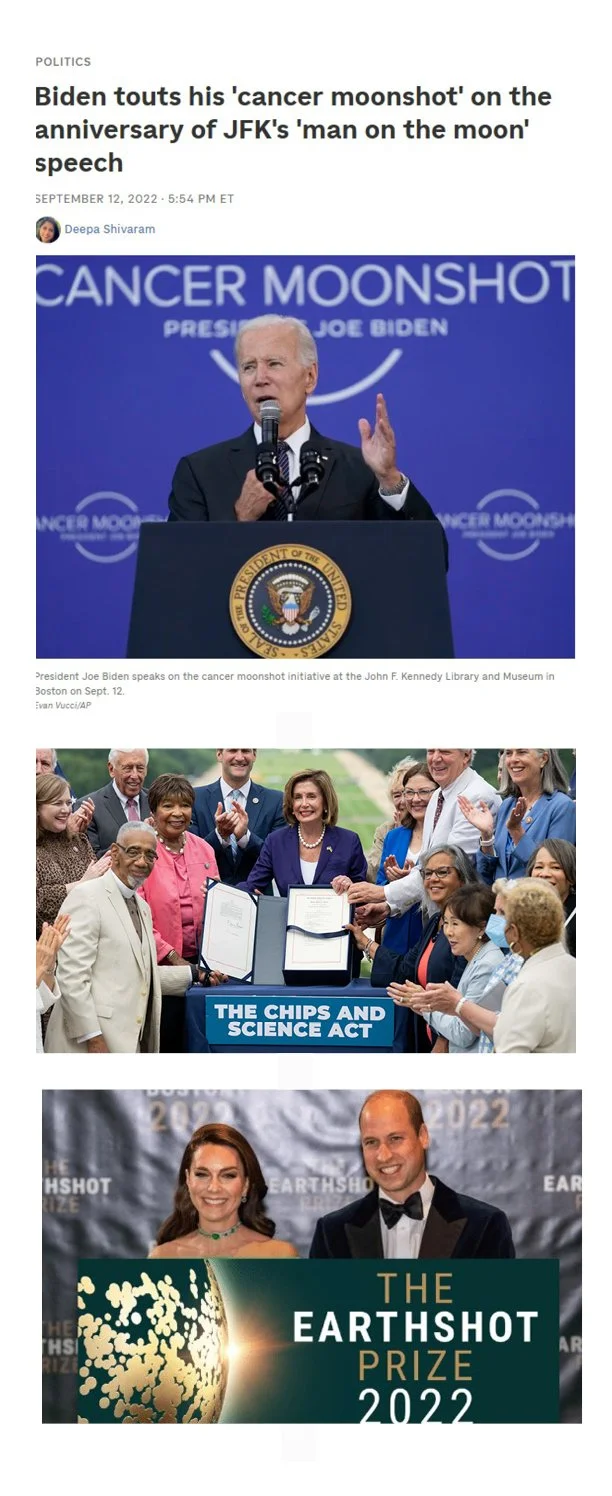
MOONSHOT MODEL The success of the Apollo mission has served as a metaphor and model for governmental and philanthropic initiatives that are concretely scoped “missions” with clear (and quantifiable) criteria of success.
TOP: NPR / Associated Press — Photo by Evan Vucci, President Biden’s Cancer Moonshot speech at the John F. Kennedy Library and Museum, Boston, September 12, 2022; MIDDLE: The White House, CHIPS and Science Act signing, August 9, 2022; BOTTOM: The Earthshot Prize / Getty Images, Prince William and Catherine, Princess of Wales, Earthshot Prize 2022, Boston, December 2, 2022.
It is now Silicon Valley where, with the help of the United States government and Stanford University, companies such as Hewlett Packard and Fairchild Semiconductor were first founded then later Intel, Apple, Google and you know the rest. It is now one of the ugliest places in the world (geography and climate aside).
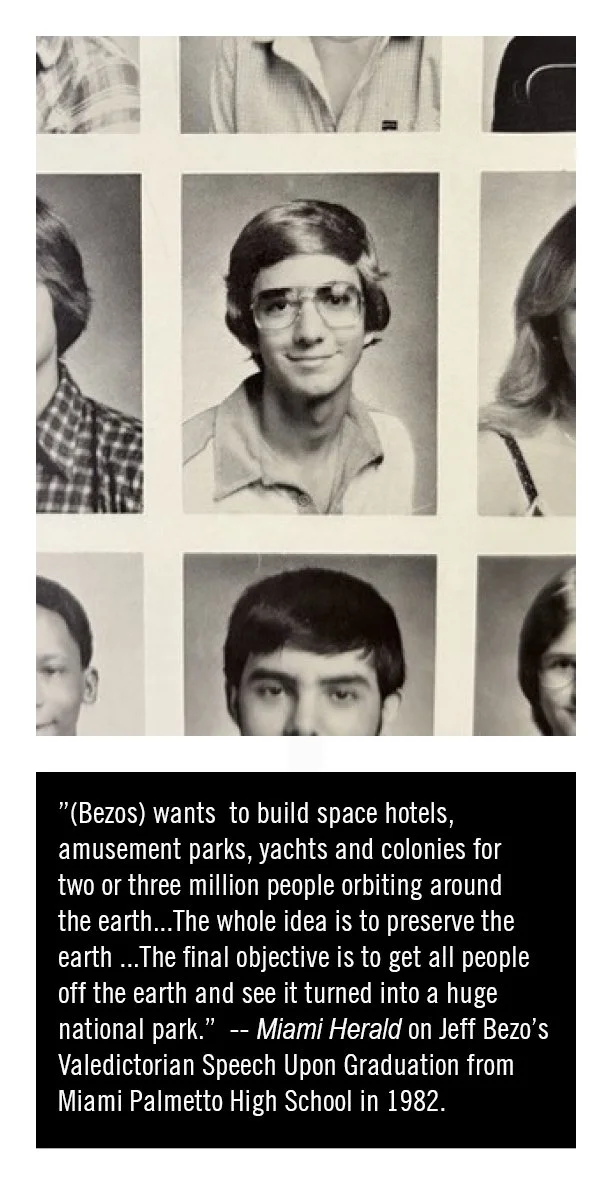
ADOLESCENT OBSESSIONS Some American teenagers inspired by childhood memories of the moonshot and their obsessions with science fiction fantasy stories come to believe that going to space is the coolest thing anybody could ever do.
IMAGE: Miami Palmetto Senior High School Yearbook, Jeff Bezos, Class of 1982; BOTTOM: Miami Herald, Jeff Bezos interview following his graduation as valedictorian, June 1982.
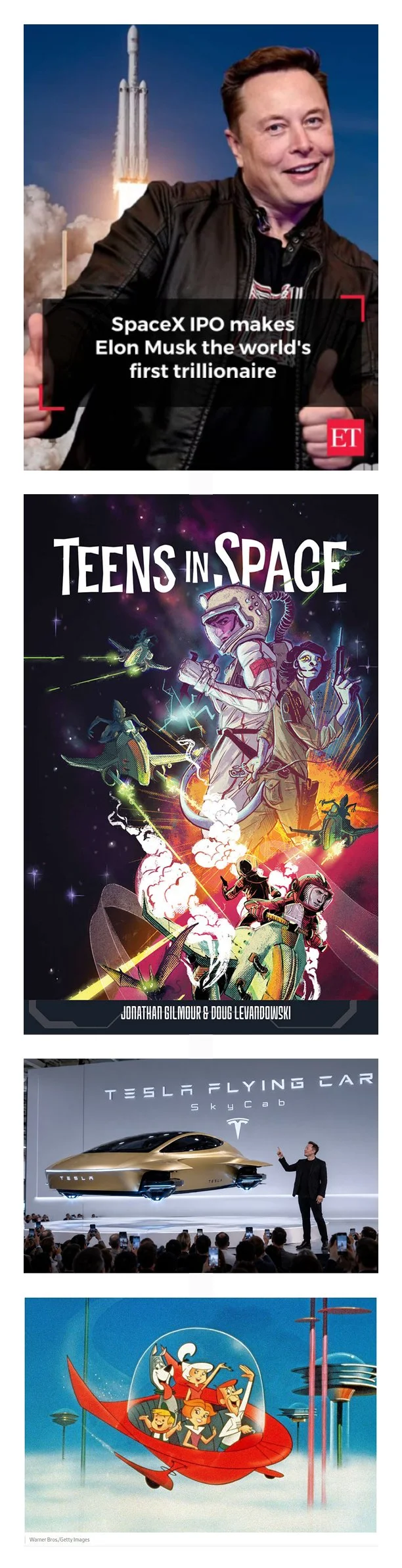
ACTING OUT Many of those same teenagers become billionaires and then get to indulge in their teenage fantasies in the real world.
TOP: The Economic Times, SpaceX IPO / Elon Musk graphic; SECOND: “Teens in Space” by Jonathan Gilmour & Doug Levandowski, Snowbright Studio; THIRD: Tesla, “Tesla Flying Car / SkyCab” concept image; BOTTOM: Warner Bros. / Getty Images, The Jetsons.
Fairchild Semiconductor was the first company to produce at scale the silicon integrated circuit (IC or chip) which enabled what we know as the computer revolution. It was a major early supplier of ICs used in the Apollo guidance Computer (AGC) that was essential to the Apollo space program’s success. Fairchild Semiconductor was one of hundreds of private sector companies that partnered with the federal government to put men on the moon.
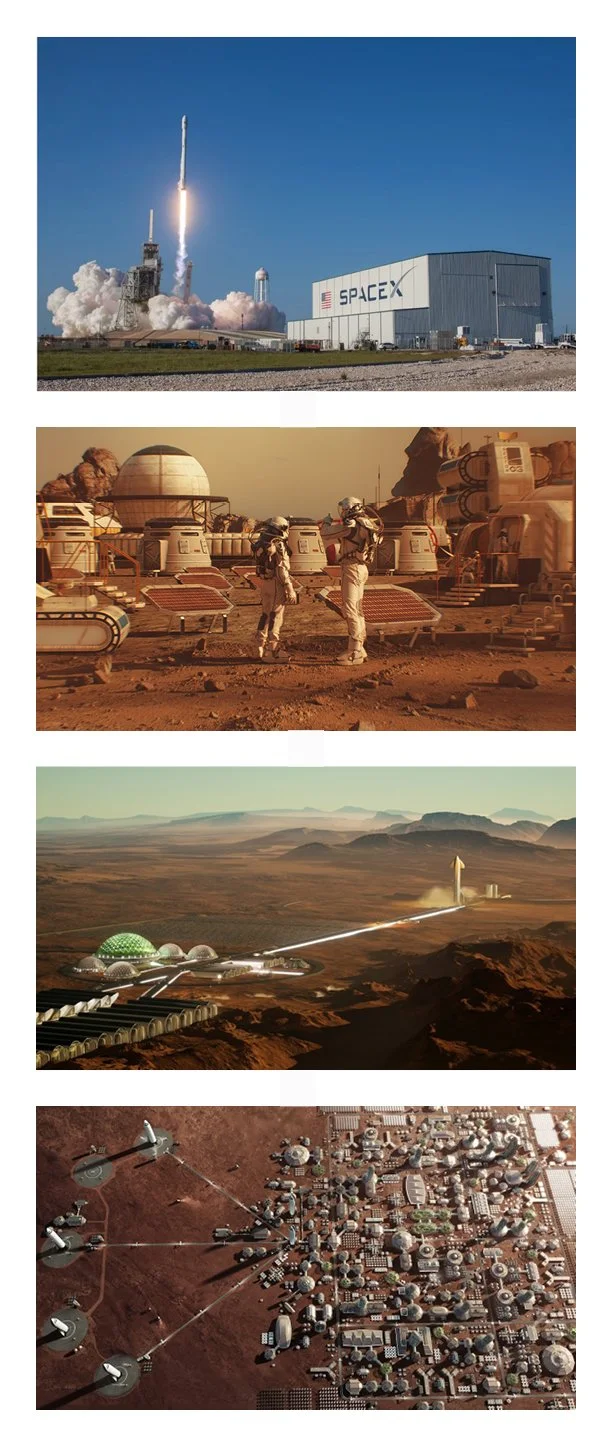
OPPORTUNITY COSTS Investing billions into the fantasy of “terraforming” Mars in lieu of fixing what ails this planet are enormous and a tragedy of our time.
TOP: SpaceX, Falcon 9 launch from Kennedy Space Center; SECOND: Silent Studio, Martian Colony Base concept rendering, 2020; THIRD: SpaceX, Mars settlement concept showing Starship and a future Martian base; BOTTOM: SpaceX, Mars City concept rendering.
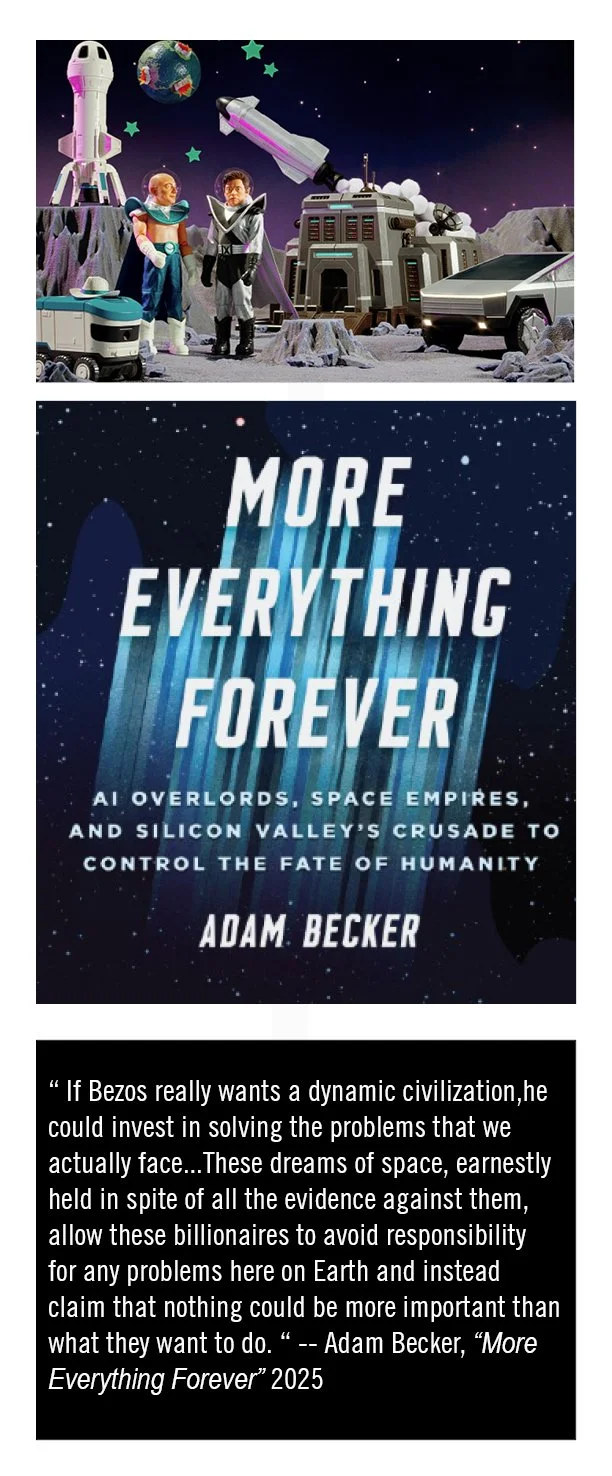
FACT NOT FICTION The science behind the Mars fantasy among other tech bro obsessions is clearly laid out in Mr. Becker’s thoroughly researched expose.
TOP: Thomas Burden, illustration for “Choose Your Overlord: Musk or Bezos?,” The Atlantic, November 2026; MIDDLE: Basic Books, More Everything Forever by Adam Becker, 2025; BOTTOM QUOTE: Adam Becker, More Everything Forever, 2025.
The Apollo program, popularly known as “the moonshot” is widely considered a success story of public/private collaboration in which the state played a major part in crafting a mission then commissioned private sector players to help fulfill it. The state was neither purely regulatory nor passive but mission oriented and agentic. Its role was to both stimulate and guide the market enabling capitalism to do what it does best (compete, innovate and produce) but to do so in the context of a goal larger than itself.

DUMB, DUMBER AND DUMBEST The resources wasted on developing stupid toys reveal this culture’s inability to focus on what matters most --how we live here on earth and the conditions of our cities.
ABOVE IMAGES: Shutterstock.
Academics and policy advisors have lately extrapolated upon that experience as a model for how to solve some of our most pressing challenges. Those often cited include climate change, clean oceans, transportation, inequality, education and health. Proposals are always accompanied with supposedly quantifiable criteria with which to measure their success—reduction of carbon (tons eliminated) and ocean trash (tons collected), increase of mobility (times traveled), prosperity (dollars earned), learning (tests passed) and longevity (years lived).
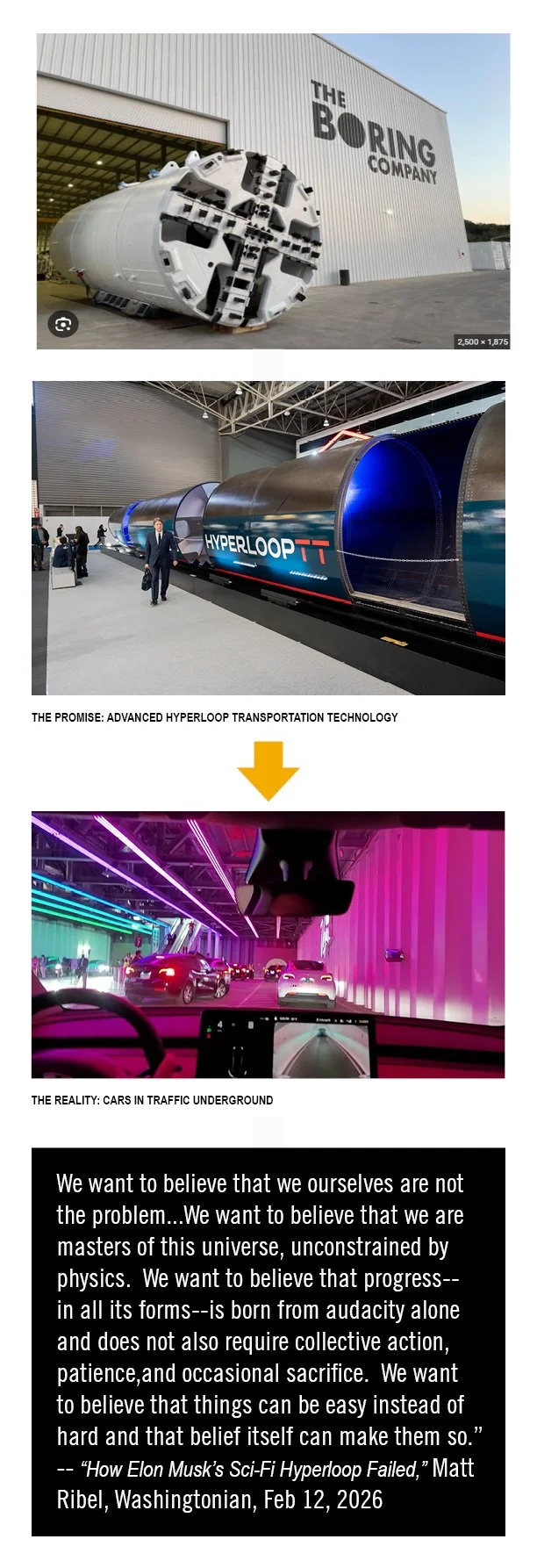
GRAND DELUSIONS That Elon Musk believes he and his technology can solve everything, that real world friction doesn’t exist or only does for stupid people is belied by the big promises of his technological adventures that have gone mostly unfulfilled.
TOP: The Boring Company / Steve Jurvetson (Wikimedia Commons); MIDDLE: Hyperloop Transportation Technologies; BOTTOM: The Boring Company / Las Vegas Convention Center Loop.
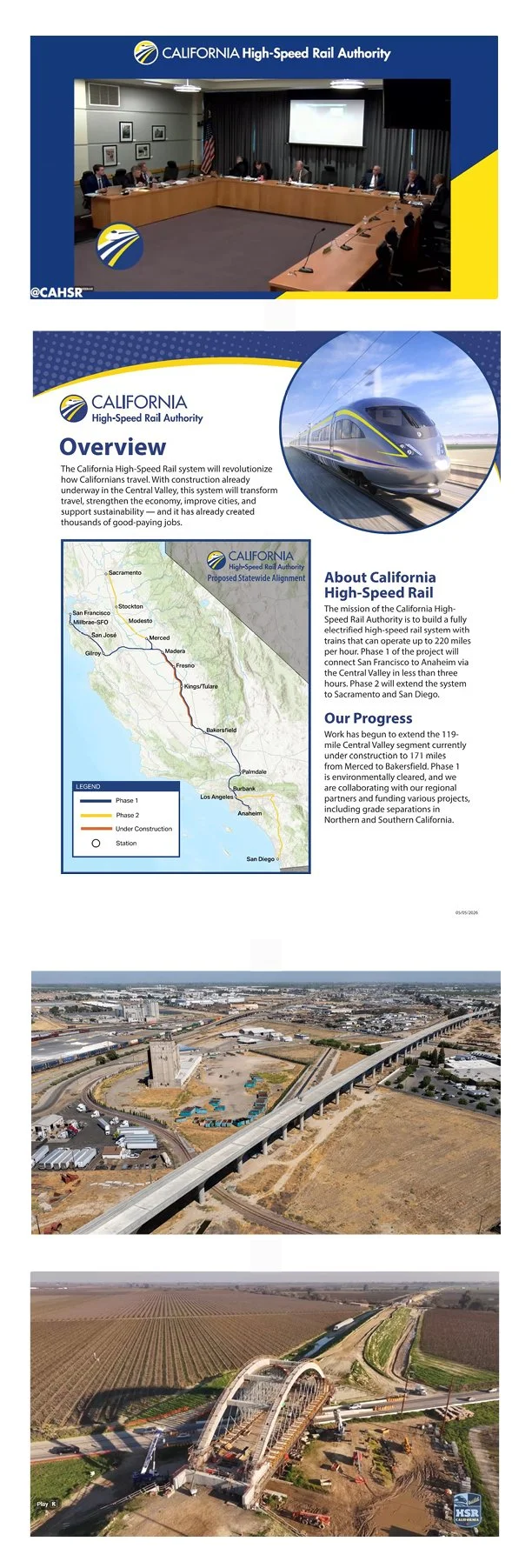
BULLET TRAIN BLUES That we are a society, and a culture incapable of building things has less to do with technology or construction and more to do with inept politicians, adversarial lawyers, childish property owners and an out-of-control consultancy class.
TOP 2 IMAGES: California High-Speed Rail Authority, BOTTOM 2 IMAGES: Shutterstock.
But what all these challenges have in common and what goes consistently unacknowledged is that beyond quantitative analysis they require introspection -- that is, some thoughts on what we value, how and where we live. Most of us live within jurisdictional boundaries we call cities, most of them gigantic, too spread out, too dense and inhumane territories that are unsympathetic to the climate, oceans, getting around and our own flourishing.
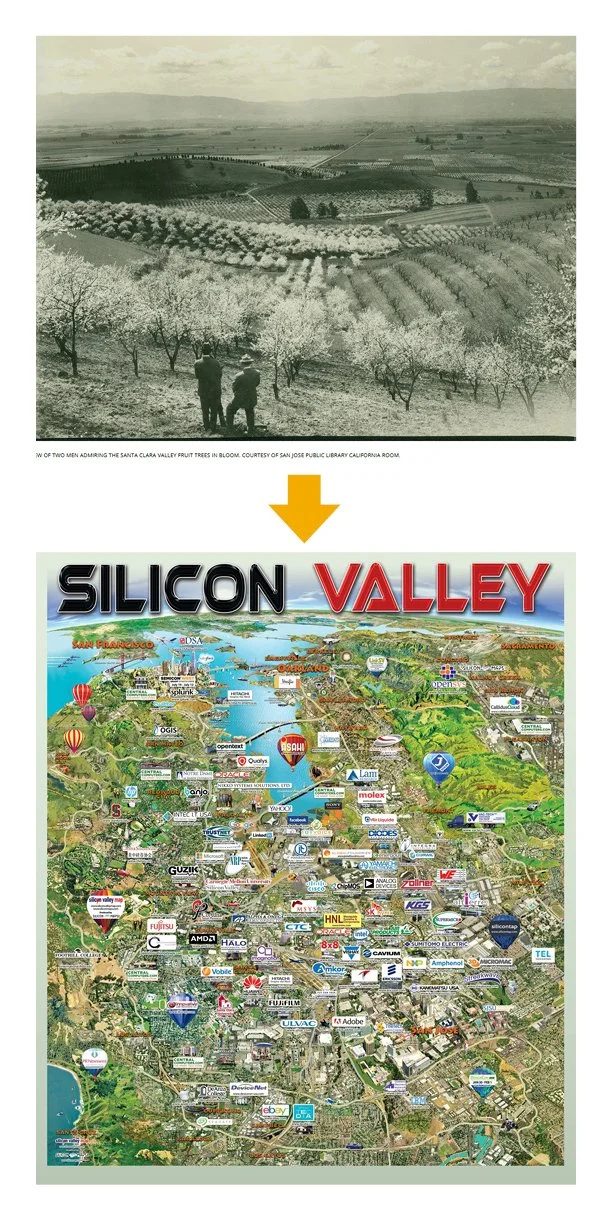
MAN MADE TRAGEDY The transformation of the Santa Clara Valley into Silicon Valley over the latter half of the 20th century was one of the great and unnecessary environmental transgressions of our time.
TOP: San José Public Library, California Room; BOTTOM: Silicon Valley Map / Silicon Maps.
No one talks about a town-planning or urban-design moonshot because no one sees the inhumanity and ugliness of where we live as an urgent problem to be solved, or rather, we do but we cannot agree on a solution. And this is because this problem is what sociologists and economists call “wicked”, that is, not easily quantifiable and instead ineffable—if, nevertheless, still very real.
TOP: San José Public Library, California Room; BOTTOM: Silicon Maps, Inc.
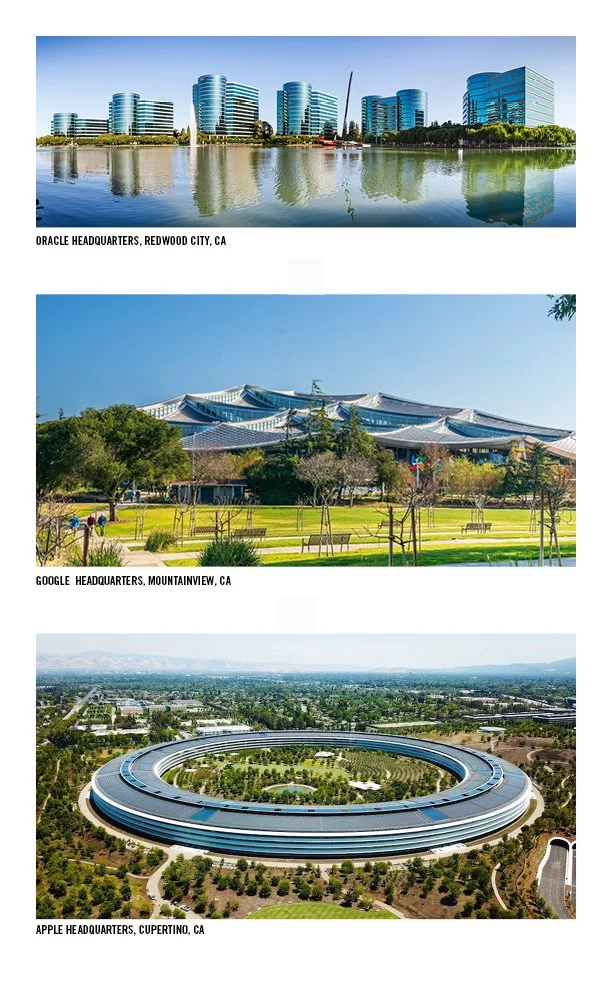
BLAND AND BANAL. That exceedingly wealthy corporations are incapable of building buildings that are more than just spaceships in the landscape with virtually no value to society or our culture is one of the great lost opportunities of our time.
ABOVE IMAGES: Shutterstock.
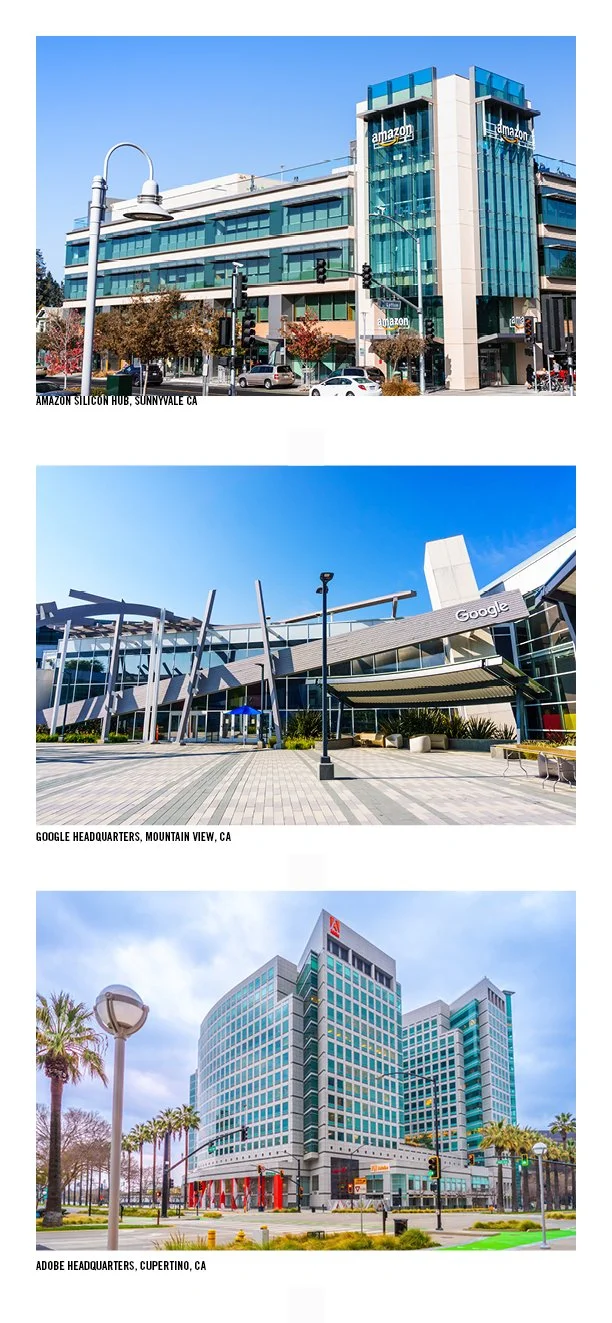
UGLY AND UGLIER Bland and banal would be an improvement on what these wealthy corporations have contributed to the culture.
ABOVE IMAGES: Shutterstock.
But were we to solve the problems of our cities, to learn how to live more compactly and humanely all those other problems would resolve themselves. We would need less and want less. And yet to address how we live, to know how to invest in ourselves requires coming together in a context of shared values and common goals.
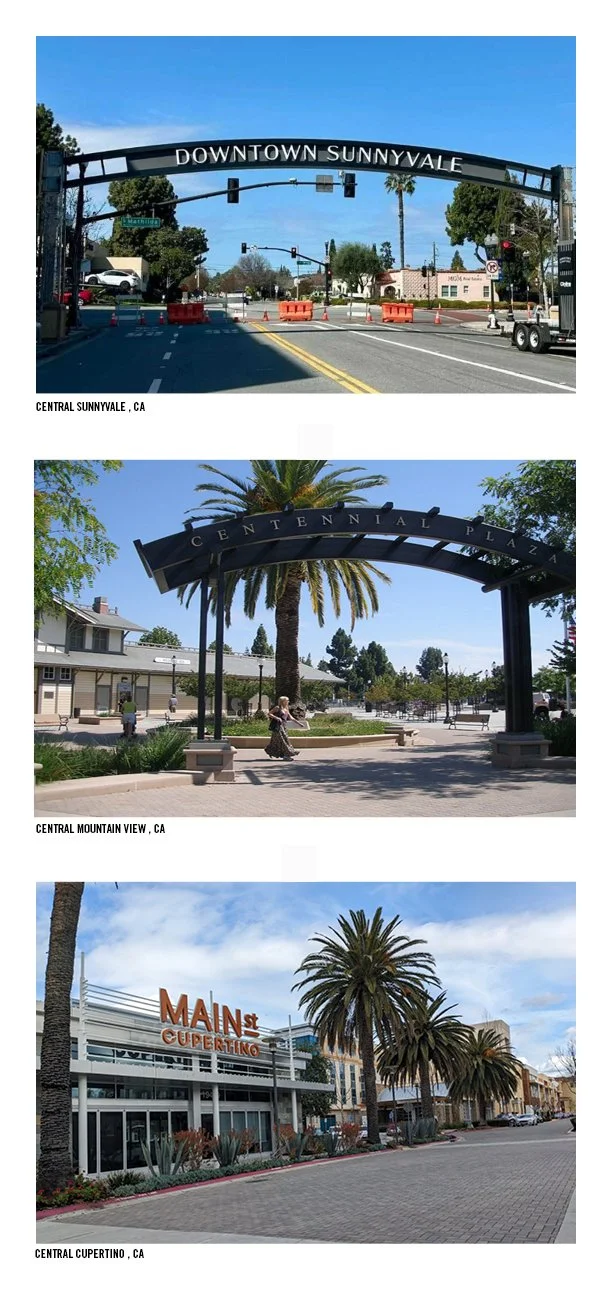
ANTI TOWN With your head in the clouds (or the cloud, or Mars, or wherever) why would you ever see what’s right in front of you much less invest in it.
ABOVE 2 IMAGES: Shutterstock. BOTTOM IMAGE: Main Street Cupertino / Sand Hill Property Company.
Beating the Soviets could be seen as a shared value and a common goal but unlike the Apollo mission, a mission to fix our cities would be more than technological and instead require the interplay of values so complex they could only ever be resolved through an artistic mindset. For an artistic mindset values are what matters most, beauty is the goal and artistry the outcome. We’re more used to the technological mind set for which numbers and facts are what matter most, efficiency is the goal and mechanization the outcome. Our cities could use more of the former and less of the latter.
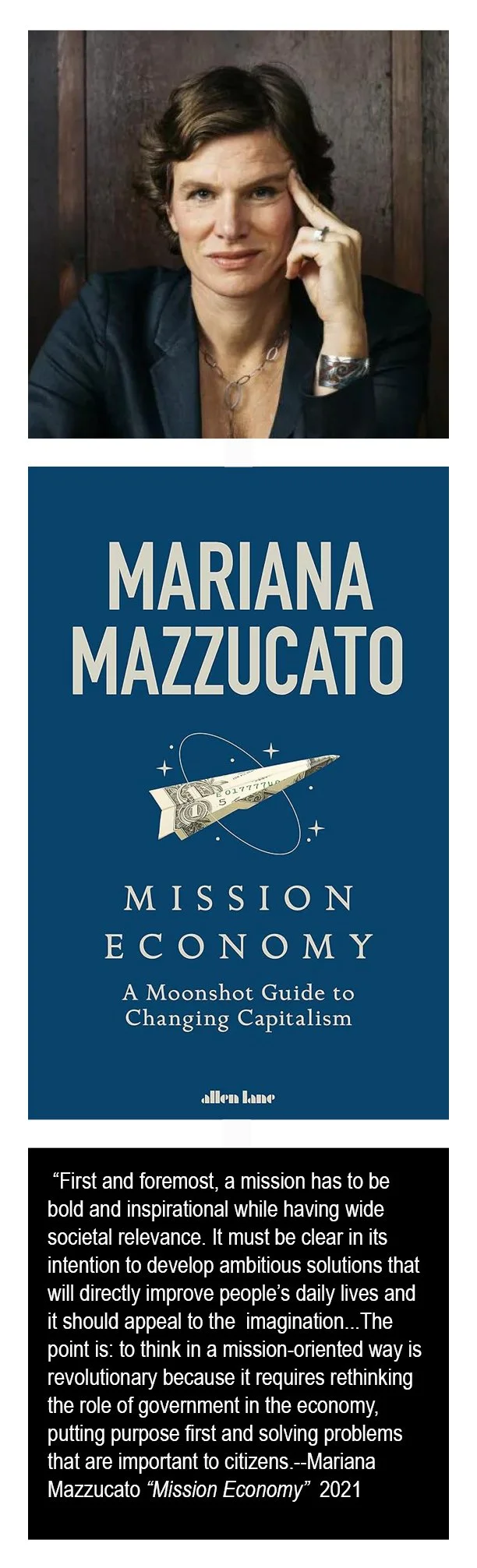
MOONSHOT FALLACY While well intentioned the focus on problems that can be quantified excludes distracts our attention from those more pressing ones, such as the condition of our cities, that cannot be quantified.
TOP: Mariana Mazzucato / UCL Institute for Innovation and Public Purpose; MIDDLE: Allen Lane / Penguin Books; BOTTOM: Mariana Mazzucato, “Mission Economy: A Moonshot Guide to Changing Capitalism,” 2021.
But as the Santa Clara Valley has demonstrated over the last half century and as we architects know we are as a nation and a culture not ready for it, nor when the time comes will it be easy, because rocket science this definitely is not.
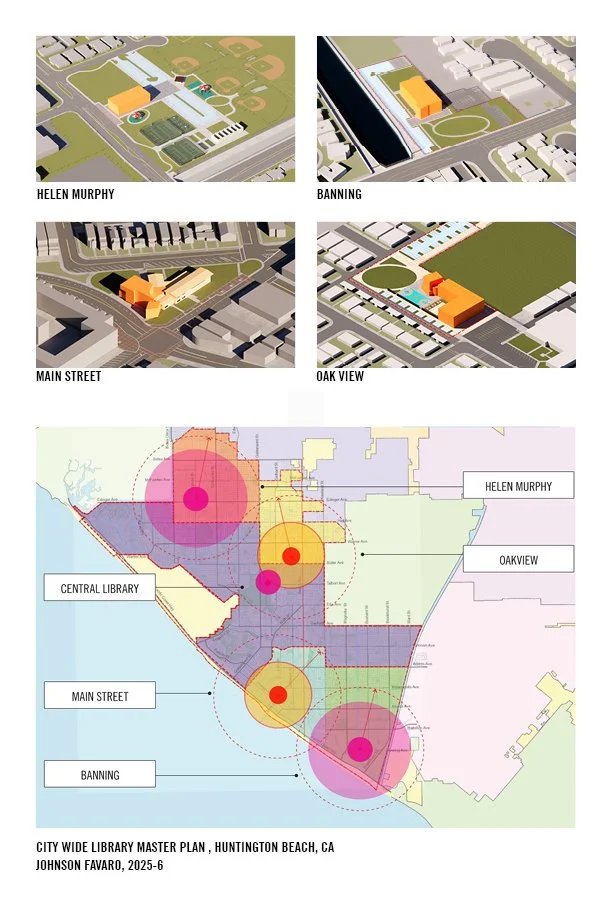
EASY MADE HARD Building something as simple as a library system that properly serves a community turns out to be controversial, beyond our imagination and therefore beyond our capacity to realize.
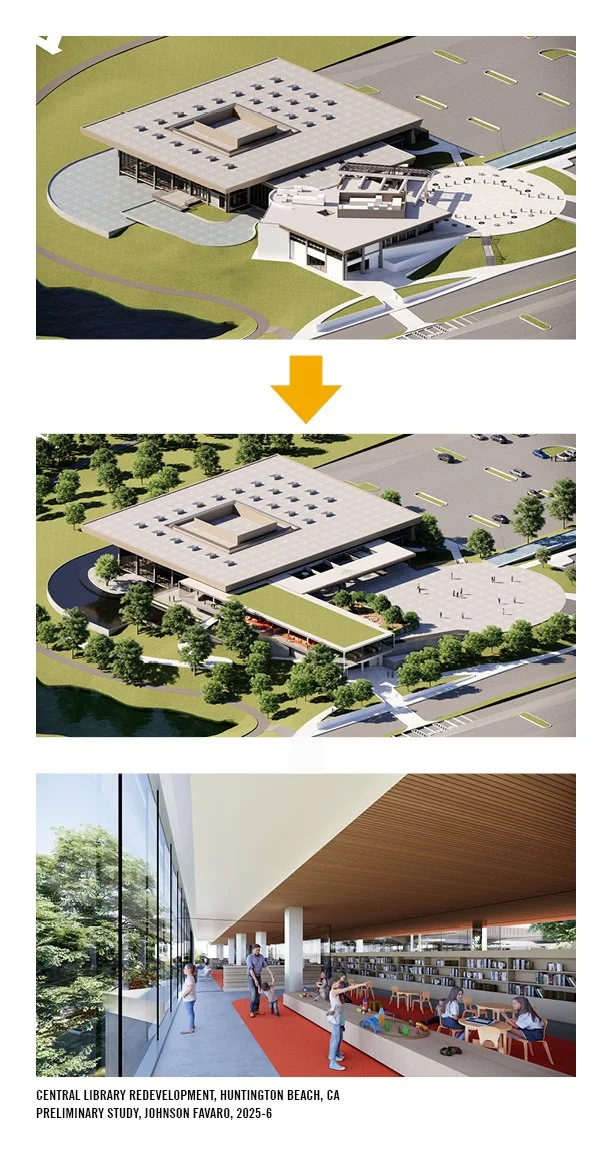
ATROPHIED ASPIRATIONS Fifty years ago this same city built a monument to its future in the form of a new central library designed by a world class architect (Richard and Dion Neutra, 1974).